

Beyond the Checkered Flag: How John Marconi Turned a Racing Life into a Legacy That Drives Hope for Kids
By Alexander Cartigan – Chief Editor
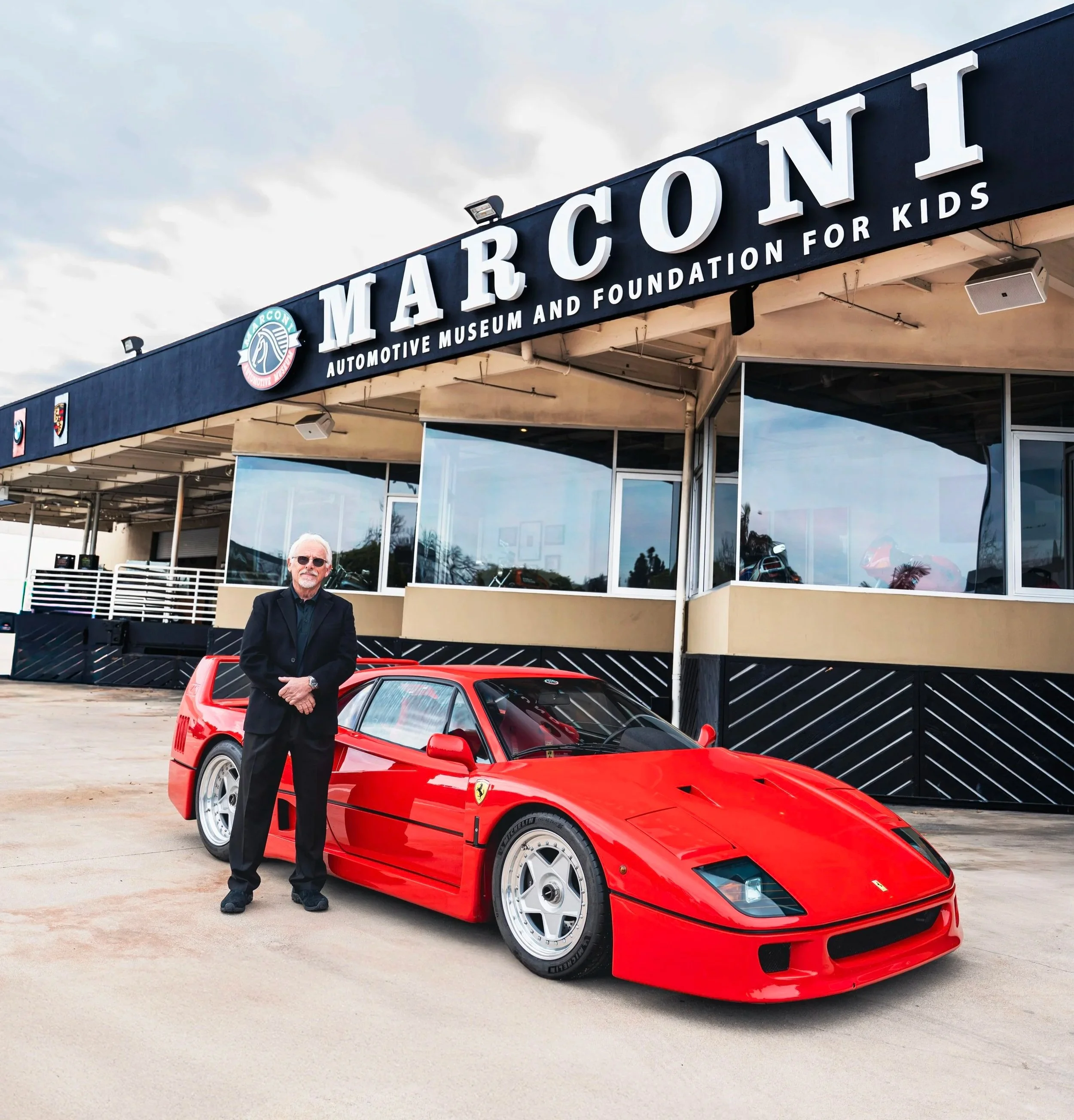
In the world of collectors, passion often begins with a single machine. For John Marconi, that passion became something much larger. It evolved into a lifelong pursuit of speed, craftsmanship, and ultimately, purpose.
Today, John is best known as the co-founder of the Marconi Automotive Museum and the Marconi Foundation for Kids, a unique institution in Tustin, California that blends world-class automotive culture with philanthropy.
Long before the museum housed a $70 million collection of Ferraris, race cars, and rare machines, Marconi himself was behind the wheel chasing apexes on racetracks around the world.
For collectors, that distinction matters.
The Marconi Automotive Museum is not simply a place where cars are displayed. It is a place where they lived. The museum also functions as an event venue that hosts fundraisers, educational tours, car gatherings, and charity events. A portion of the proceeds benefits organizations that support at-risk youth in the community.
The Racing Years
In the early 1990s, Ferrari created what it called a gentleman’s racing series built around the Ferrari 348 platform. The concept was simple. Road cars were transformed into track machines, allowing enthusiasts to compete in factory-supported racing.
John did not simply participate.
He dominated.
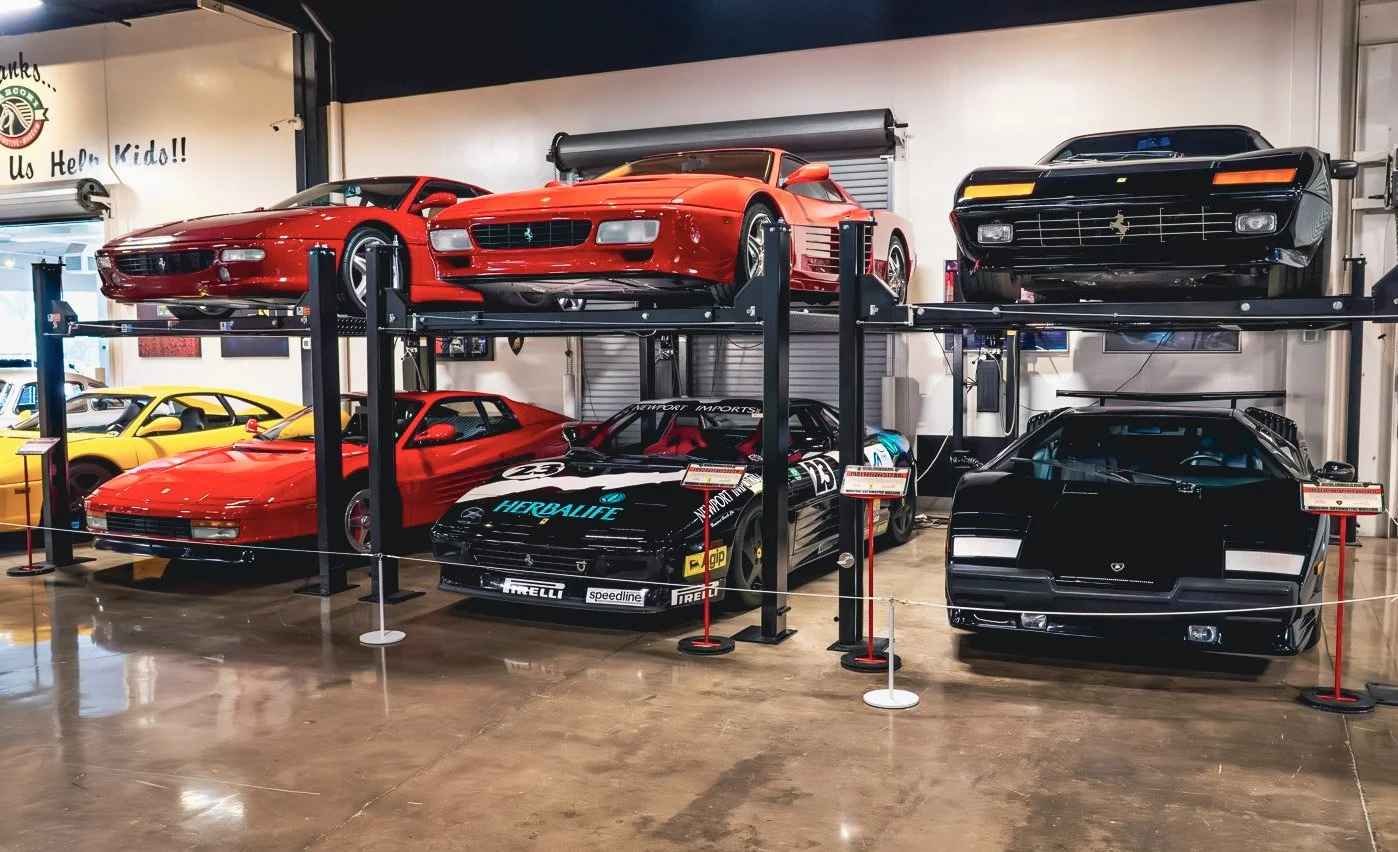
Driving the now iconic 1992 Ferrari 348 Challenge Speciale, John went on to win the 1994 Ferrari 348 U.S. Challenge Championship. He later traveled overseas to compete in the Ferrari 348 World Challenge Series, where he secured first place in the Time Trial and second overall in the World Championships.

For those familiar with Ferrari’s Challenge series, the era holds special significance. It was the closest modern racing that came to the spirit of 1960s sports car competition, where road cars transformed into weekend race machines.
John’s Ferrari 348 Challenge car remains one of the most important pieces in the museum today.
Visitors do not simply see a race car.
They see the machine that carried its driver to a championship.
A Collector’s Vision
John and his father Dick Marconi had been passionate automotive collectors for decades. Over the course of nearly forty years, they assembled an eclectic collection of cars and motorcycles that reflected their tastes as enthusiasts.
To house the growing collection and their race team, they purchased a large industrial building in Tustin, California in the early 1990s.
The structure had once been a salad oil manufacturing plant, far removed from the world of Ferrari engines and racing heritage. With vision and determination, the father and son team renovated the building and transformed it into the home base for their racing operations and collection.

For several years, the building functioned exactly as intended. It served as a private sanctuary for machines and motorsport.
But success has a way of reshaping priorities.
As the Marconi family’s manufacturing business continued to grow, the time required to race professionally disappeared. The race team retired, leaving behind a massive building filled with cars and motorcycles that were rarely seen outside a tight circle of enthusiasts.
That realization sparked an idea.
Rather than keeping the collection private, why not share it with the community?
The Birth of the Marconi Automotive Museum
What began as a personal garage evolved into something far greater.
The Marconi family decided to transform the building into a public automotive museum and donate the collection to create the Marconi Foundation for Kids, a 501(c)(3) nonprofit organization that raises funds and awareness for children’s charities through events, tours, and community partnerships.
Over the years, the foundation has helped support numerous local organizations that serve families and children who need it most.
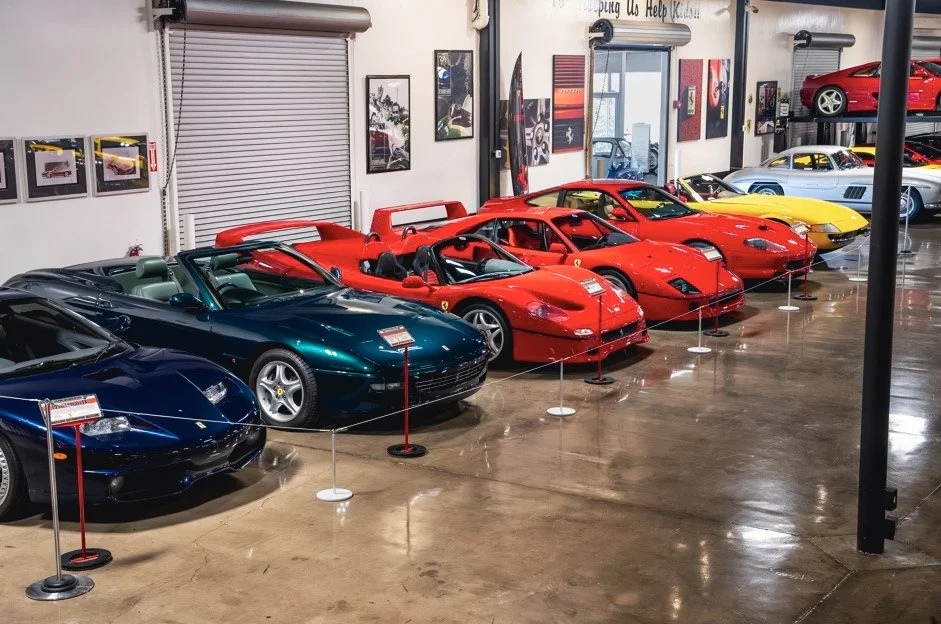
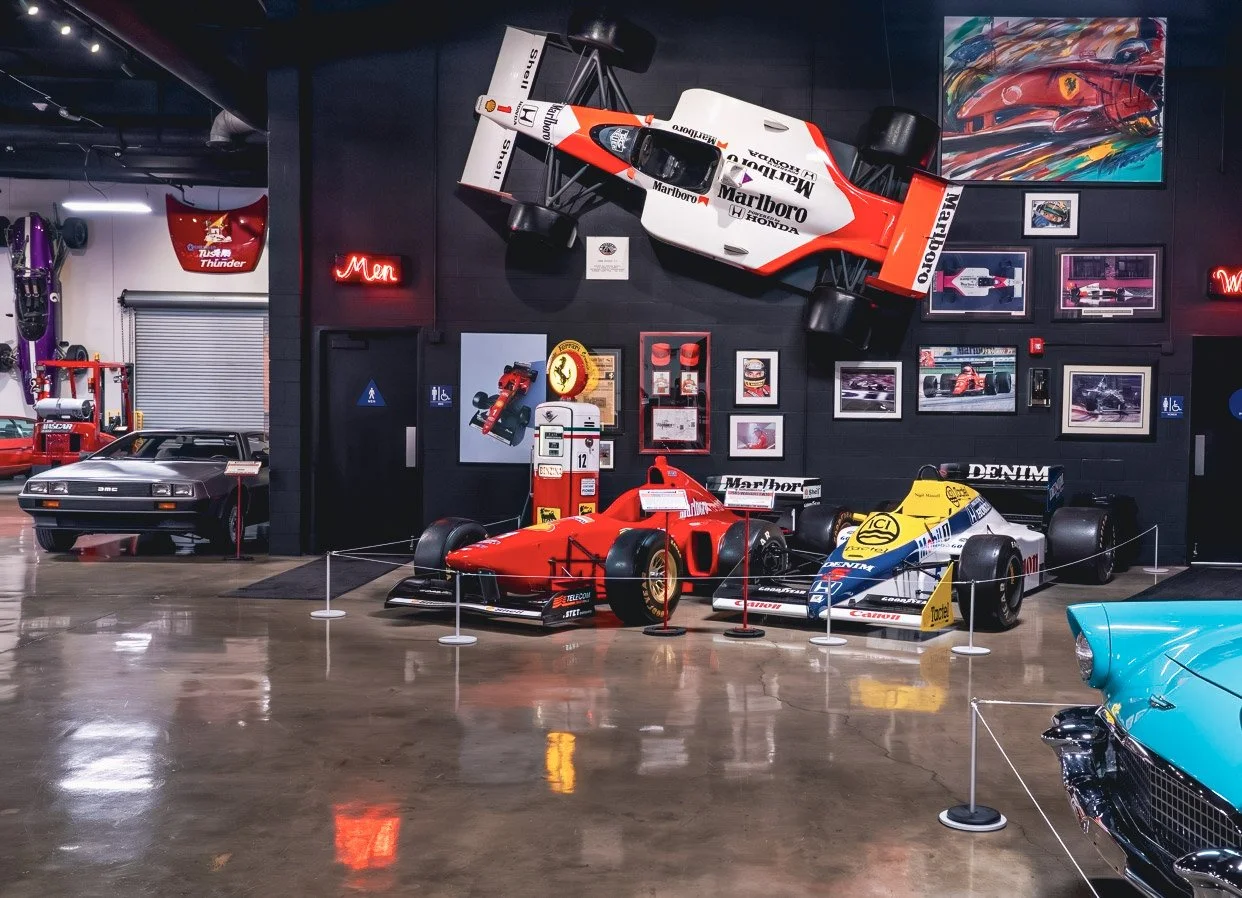
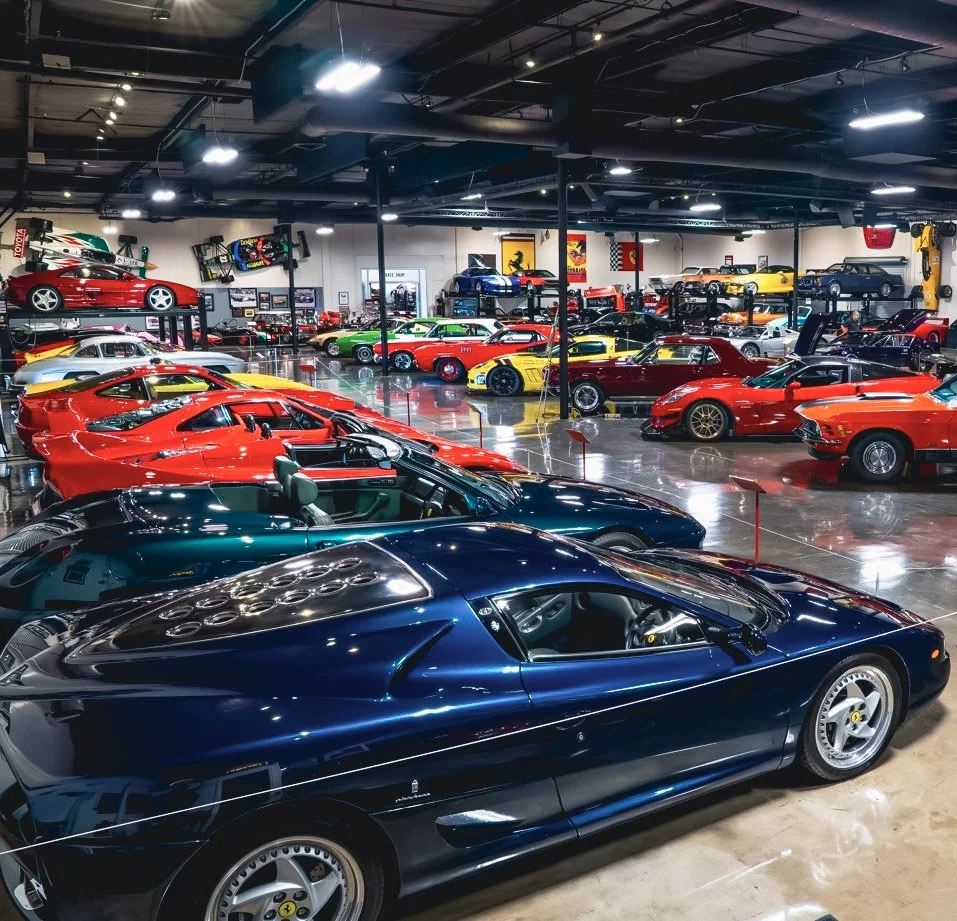
Today the museum houses more than 100 vehicles valued at approximately $70 million, including Ferraris, Lamborghinis, muscle cars, race machines, motorcycles, and rare automotive memorabilia.
But the collection itself is only part of the story.
For John, the purpose of the museum was never simply preservation.
It was impact.
In a world where collections often remain behind closed doors, the Marconi Automotive Museum stands to be something rare. It is a private passion that has turned public good.
A Family Legacy

The Marconi story is deeply rooted in family. John often credits the foundation’s success to the collective effort of those around him. Family members, partners, and a community that believed a museum could serve a greater purpose.
It is that philosophy that continues to guide the organization today.
Visitors don’t simply walk through rows of exotic machinery.
They step into a space where automotive passion intersects with generosity.
Time Told, Miles Driven
Like many automotive enthusiasts, John’s appreciation for mechanical craftsmanship extends beyond cars.
He is also an avid watch collector.
When I met John, he was wearing two watches.
Not many people can pull that off with confidence. John does it with effortless certainty.
As he put it with a smile, “This is show. This is go.”
On one wrist sits what collectors know as the Seiko “Captain Willard.” The watch gained its nickname from the cult classic film Apocalypse Now, where Martin Sheen’s character famously wore the piece on screen.
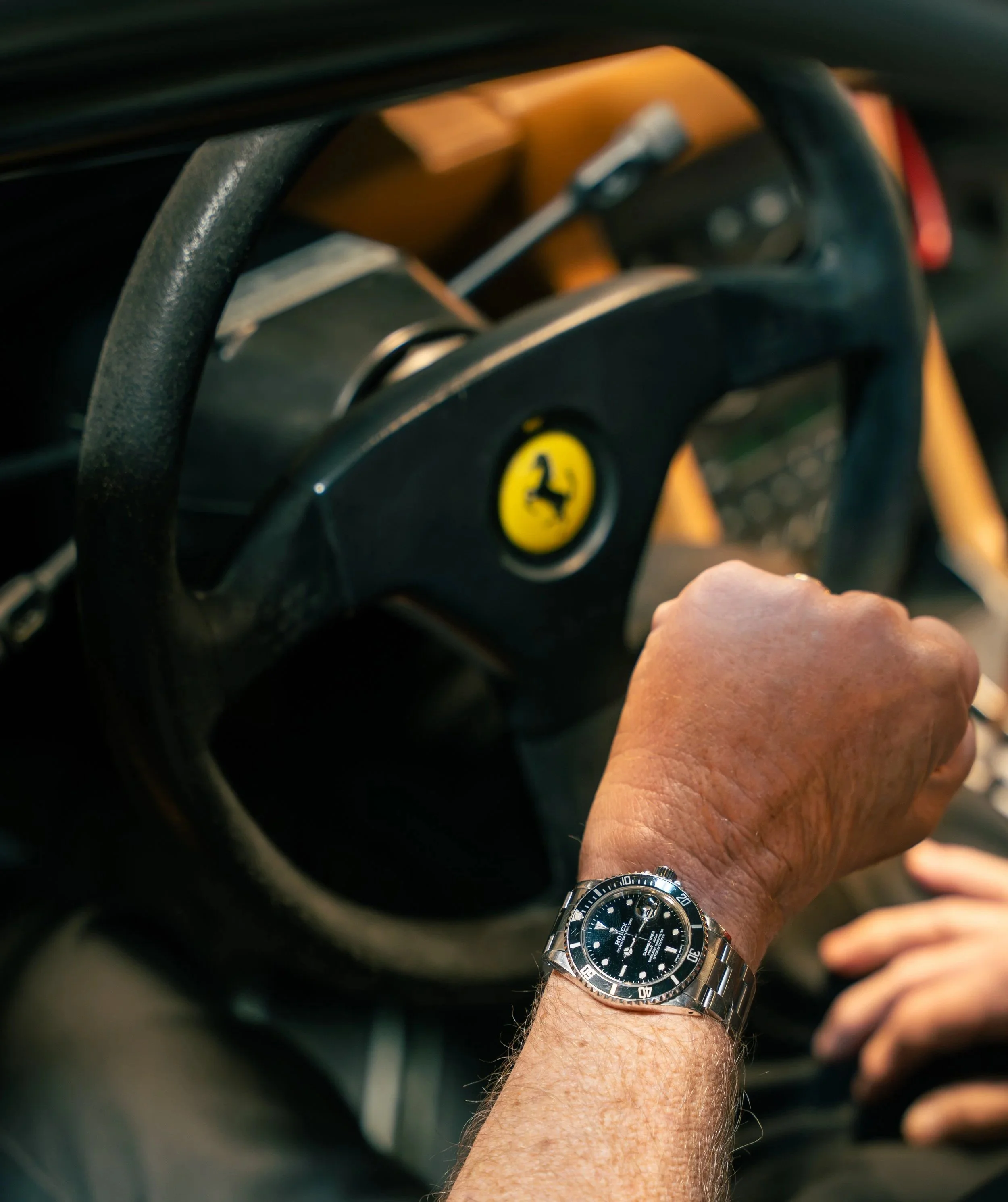
On his other wrist is something far more personal. A stainless steel Rolex Submariner with a story spanning more than half a century.
John acquired the watch in Switzerland when he was around 21 years old during a trip connected to the Mercedes European Delivery program. While overseas he walked into a Rolex dealership and purchased the watch for $475.
It has been on his wrist ever since.
Over the years the Rolex Submariner became far more than a watch. It became a witness to John’s life in motorsport.
“This Rolex has been on my wrist in every race that I’ve ever done, from when I first started racing in Formula Ford, through winning the championship, all the way through my career.” John recalled.
The watch carries the marks of that life.
John wore it while welding and grinding metal. It accumulated splatter across the bracelet and scratches earned in garages and paddocks. At one point the bezel was knocked completely off, and years of use eventually wore down the bracelet itself.
Most collectors would retire a watch long before it reached that point.
John rebuilt it.
The watch was eventually restored while preserving the history it carried with it.
Today it remains exactly where it has always been.
On John’s wrist.
For collectors, that may be the most meaningful detail of all.
Because while watches often mark milestones, this one did not simply measure time.
It lived it.
For John, watches embody the same principles that drew him to cars in the first place: craftsmanship, heritage, and discipline.
Automotive Masterpiece
When I asked John Marconi a question every collector eventually faces. If you had to choose one car and one watch for the rest of your life. He didn’t hesitate.

“The F40 and the Submariner,” he said with a calm certainty. “If you're going to go big… that's the F40. I respect that car. It has a very unique language that I understand.”
For someone who has spent decades surrounded by some of the most important machines in Ferrari’s history, the answer carries weight.
Inside the Marconi Automotive Museum sit icons that define generations of Maranello engineering: the Ferrari F40, the Ferrari F50, and a rotating lineup of rare racing and road machines that collectively represent one of the most significant private Ferrari collections in the United States.
But even among such company, John tends to return to the Ferrari F40.
Part of that connection comes from his background as a driver. The F40 is not a car that flatters its operator. There are no electronic safety nets, no traction control systems quietly correcting mistakes behind the scenes.
It is raw, mechanical, and brutally honest. A twin-turbocharged machine that demands respect and rewards precision.
For John, that language feels familiar.
It mirrors the era of racing he came from, when drivers were expected to manage the car with feel rather than software. The F40 speaks in the same dialect: turbo lag, chassis feedback, and the constant conversation between driver, machine, and road.
Collectors often refer to the F40 as Ferrari’s last truly analog supercar, the final model personally approved by Enzo Ferrari before his passing. That heritage alone gives the car an almost mythological status.
But for John, the appeal is more personal.
The car represents the purity of engineering, a machine built without compromise, where every component exists for a single purpose: performance.
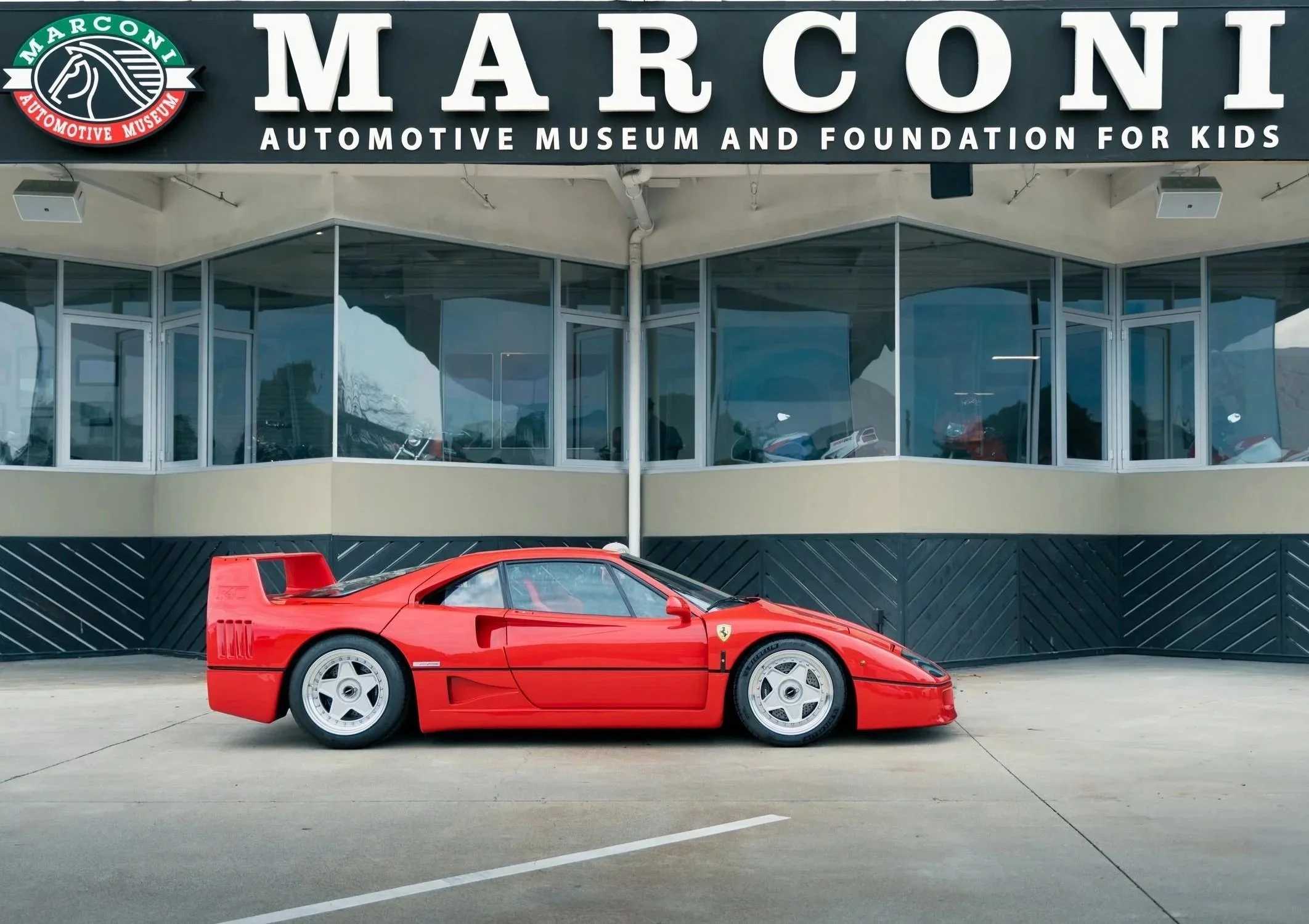
Much like the Rolex Submariner he pairs with it in his imagined one-car, one-watch life.
Both are icons of their respective worlds. Both were designed as tools before they became symbols. And both have endured decades of changing technology while remaining fundamentally unchanged in spirit.
Perhaps that’s why the pairing feels so natural.
One measures time.
The other makes you forget it entirely.
More Than a Museum
Today, the Marconi Automotive Museum and Foundation for Kids stands as one of Southern California’s most remarkable automotive destinations.
Collectors come to see icons like the Ferrari F40 and F50, championship race cars, and rare machines that defined eras of automotive history.
But the real legacy lies in something deeper.
The museum proves that passion, when shared, can become a powerful force for good.
John Marconi began his journey chasing speed on racetracks. Along the way, he and his father built a collection that now fuels something far more meaningful.
A place where cars inspire dreams, community creates change, and purpose drives everything forward.
Photography:
Connect with Marconi:
Website: https://marconimuseum.org/
Facebook: https://www.facebook.com/MarconiAutomotiveMuseum
Instagram: @marconimuseum
YouTube: @TheMarconiMuseum