

Chrono Attack at World of Racing
WATCHES, FULL-MOTION RACING, AND THE COMMUNITY BEHID AN AFTERNOON IN TUSTIN
By Izu Okpara
On September 12, WORN & DRIVEN took over World of Racing in Tustin for Chrono Attack: full-motion simulators, live lap times, watches worth stopping for, and a room full of people who didn't need much convincing to compete.
The premise was straightforward: put members and guests into the simulators, put their lap times on the board, and see where the afternoon went.
It went considerably further than the timing sheets.
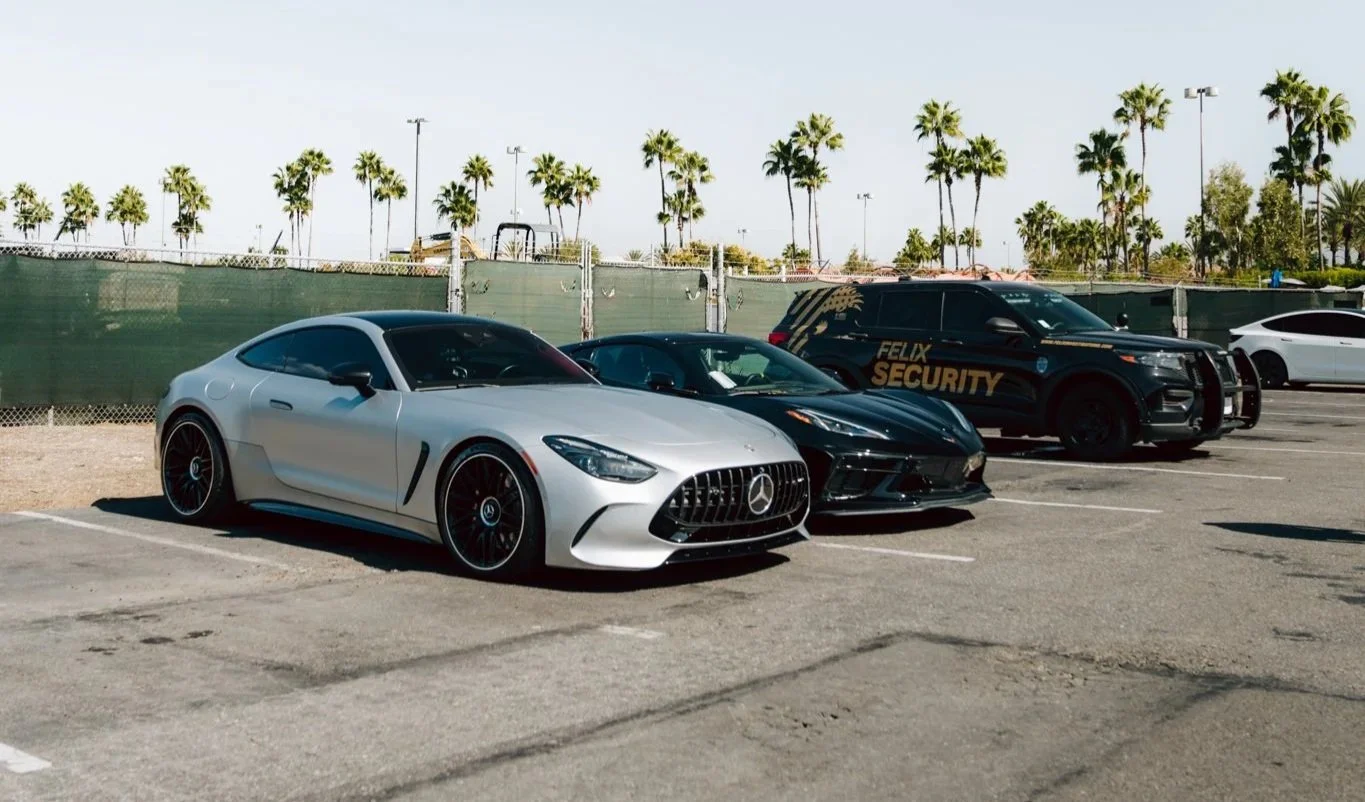
Felix Security, parked among the arrivals.
Outside, the machinery arriving had company of a different sort. Felix Security & Investigations, led by CEO JM Felix and Co-CEO Michael Sofer, handled security for the afternoon as the Official Security Sponsors of Chrono Attack. With the cars, watches, and crowd gathering inside, it was the sort of presence that mattered precisely because guests didn't have to think about it.
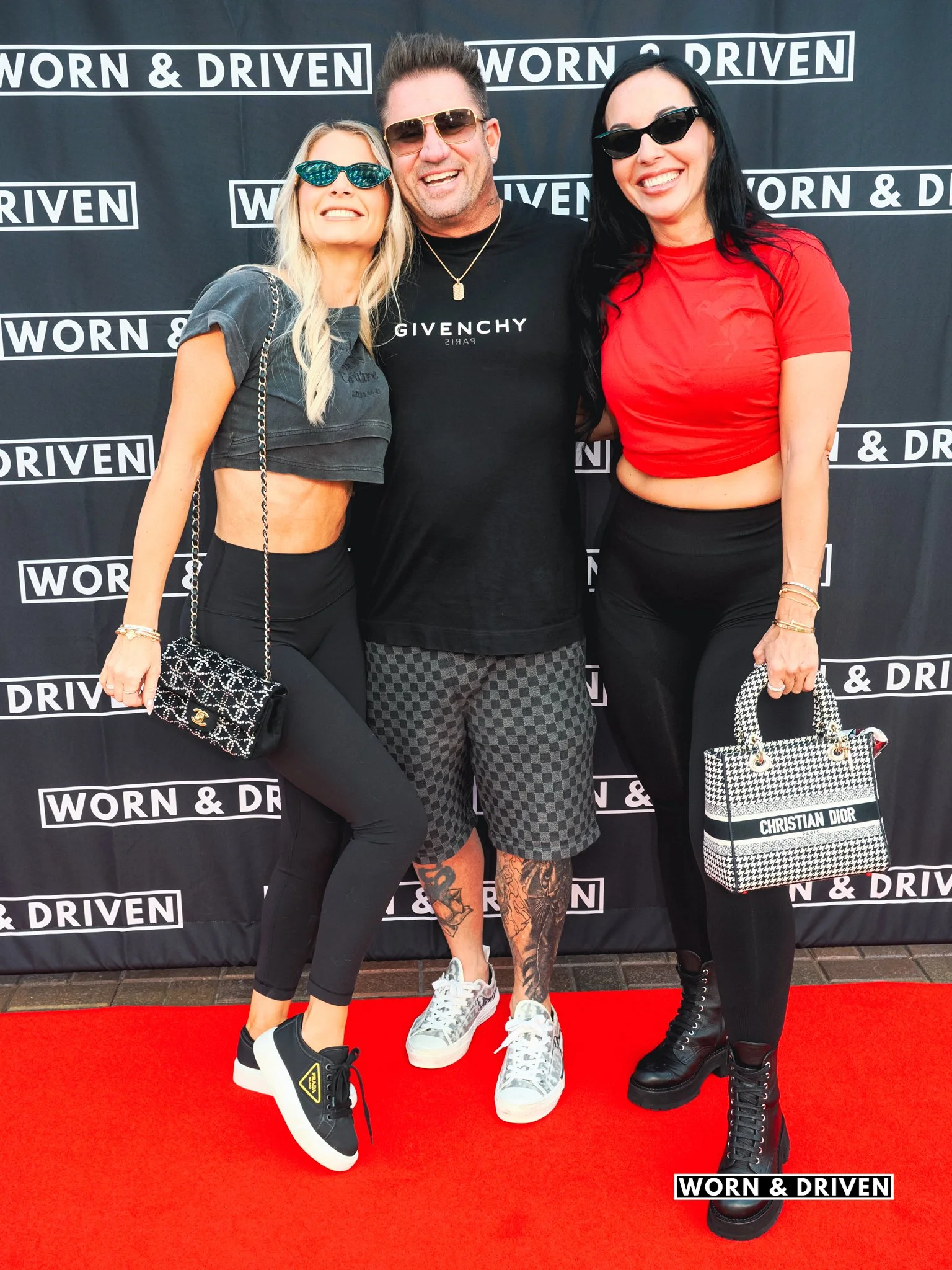
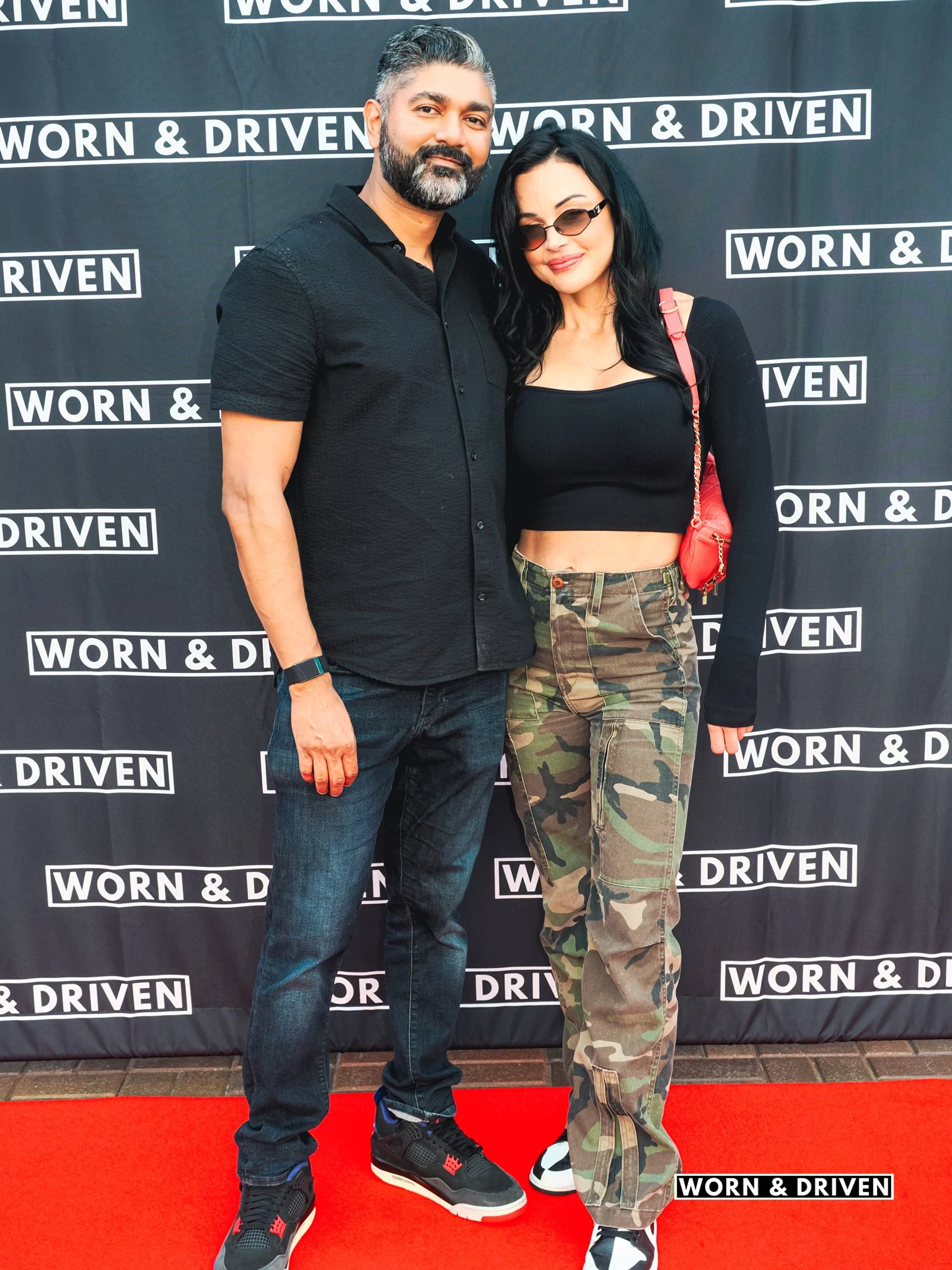
Before anyone climbed into a simulator, the WORN & DRIVEN backdrop became an informal meeting point as familiar faces arrived, friends reconnected, and people who may have previously known one another only through cars, watches, or social media finally occupied the same room.
That has increasingly become the point of these gatherings. The objects may provide the introduction, but the people determine whether anyone wants to come back.

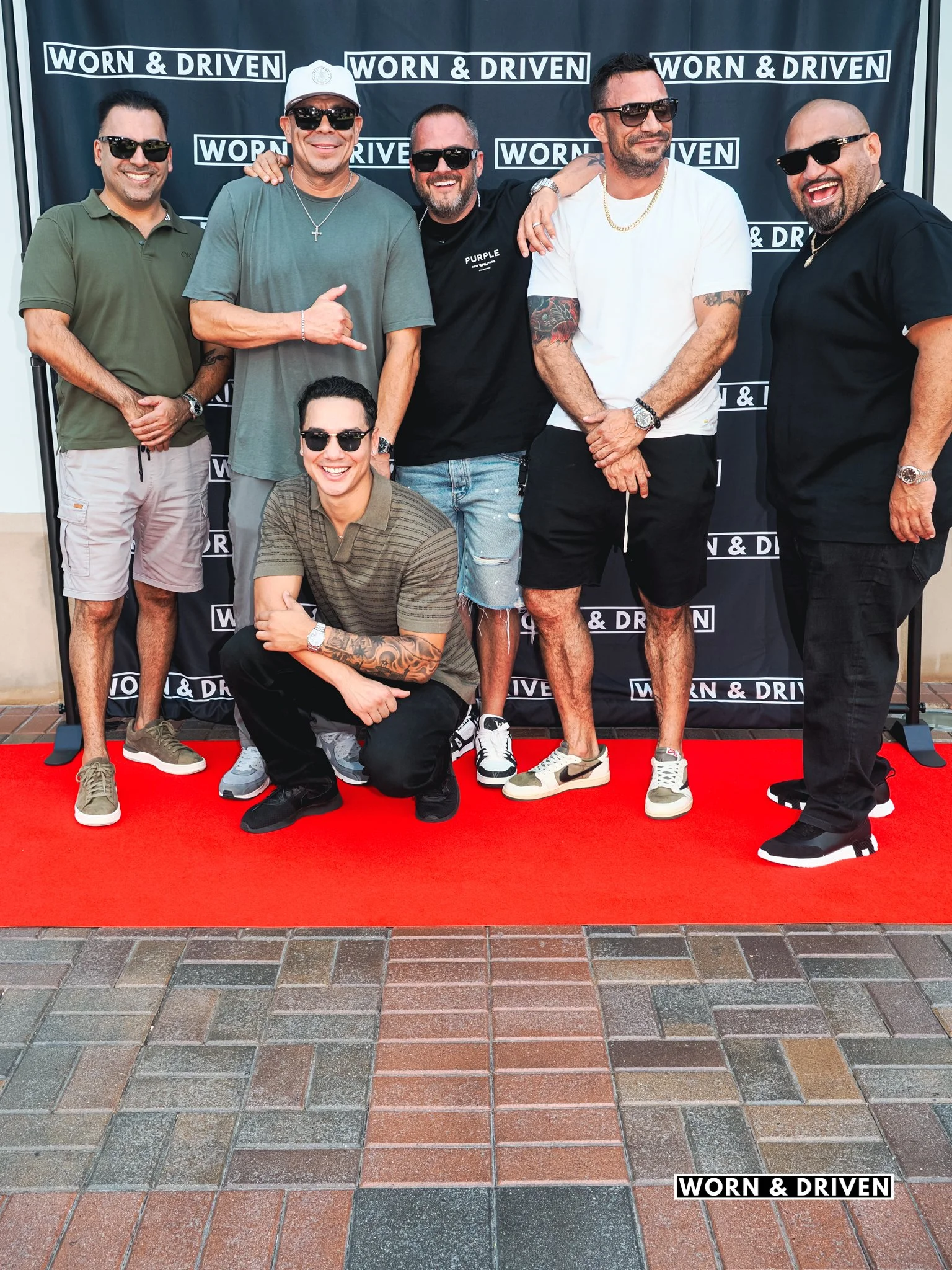
And inevitably, at a WORN & DRIVEN event, the wrists start appearing.
Someone notices a watch. Another wrist joins the conversation. Then another. Before long, what began as a discussion about a particular reference becomes a comparison of movements, materials, provenance, design, or simply why someone chose to wear that watch that day.
It is difficult to manufacture that kind of interaction. Here, nobody had to.
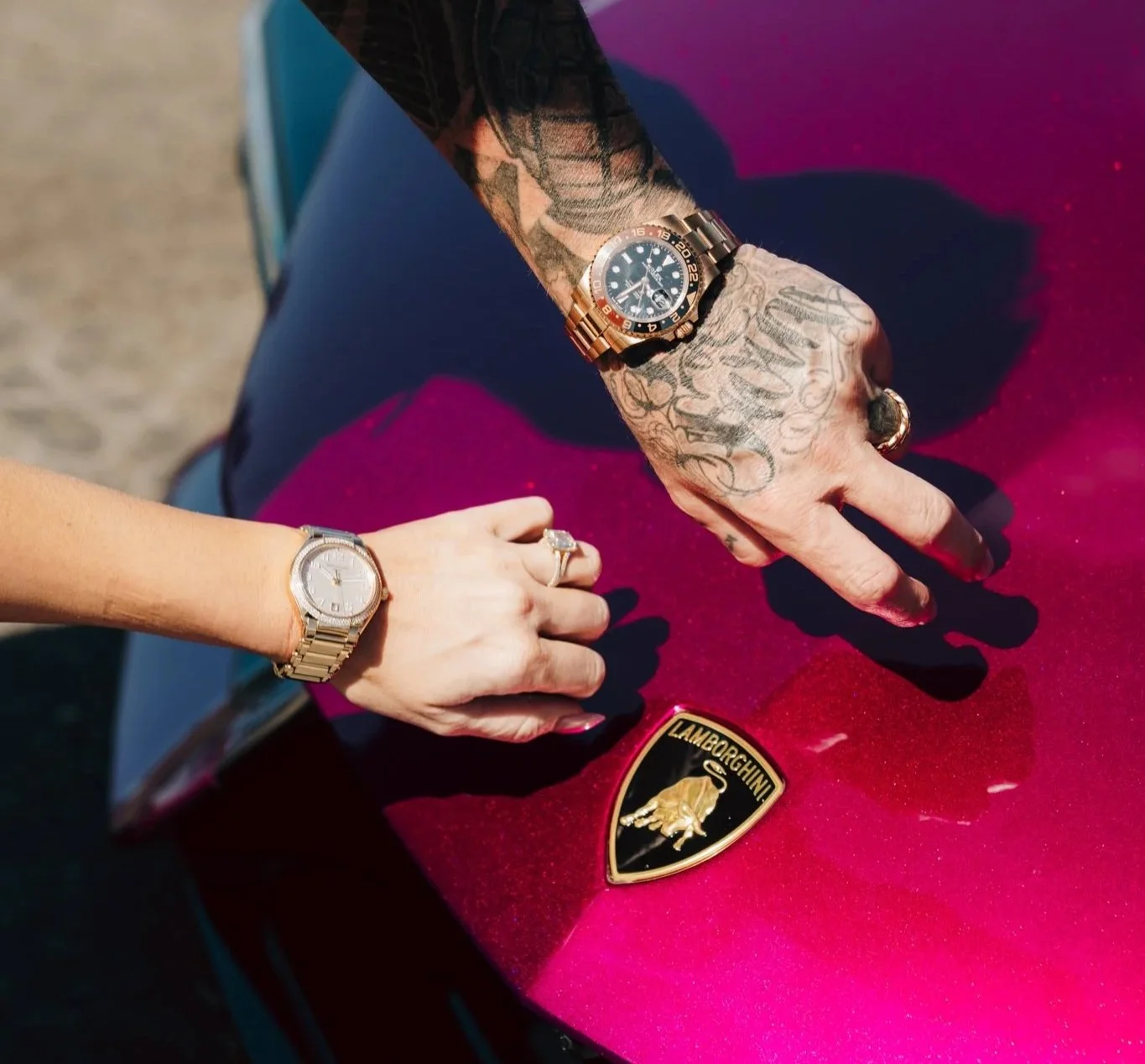
Quinsee and Billy Beach. A two-tone GMT and a Patek Philippe, resting on the bull.
At WORN & DRIVEN, the relationship becomes unusually literal. A photograph of two wrists positioned over a Lamborghini badge almost explains the idea without requiring a paragraph: automotive culture on one side, horology on the other, and people at the center of both.
That made Wrist Demeanor a natural presence at Chrono Attack.
Led by founder Kyle Anderson-Mape, Wrist Demeanor works in the luxury-watch market across sourcing, acquisition, sales, valuation, and collection strategy, and has become a horological partner within the WORN & DRIVEN community. For Chrono Attack, the display brought some serious machinery of the non-automotive variety into the room.
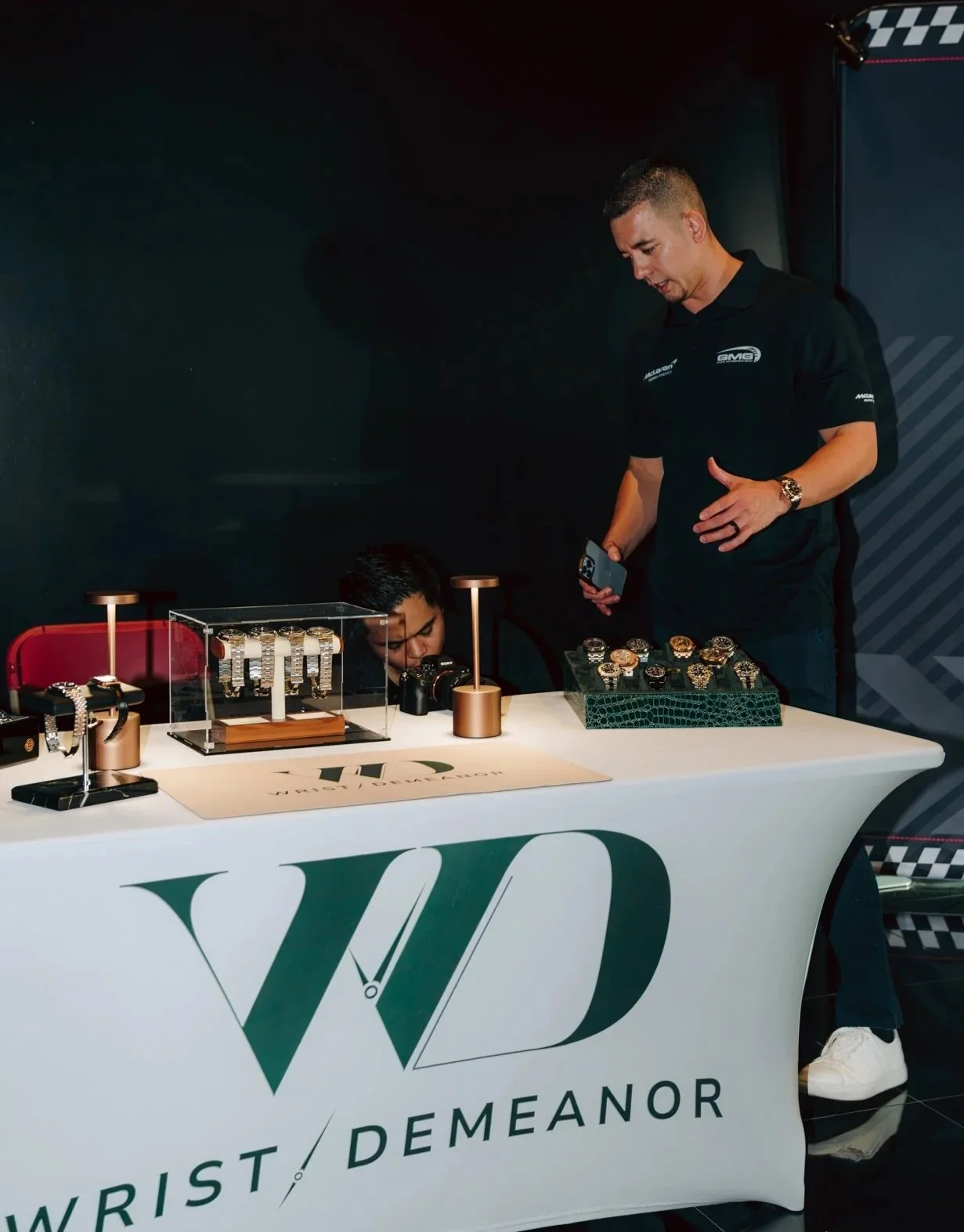
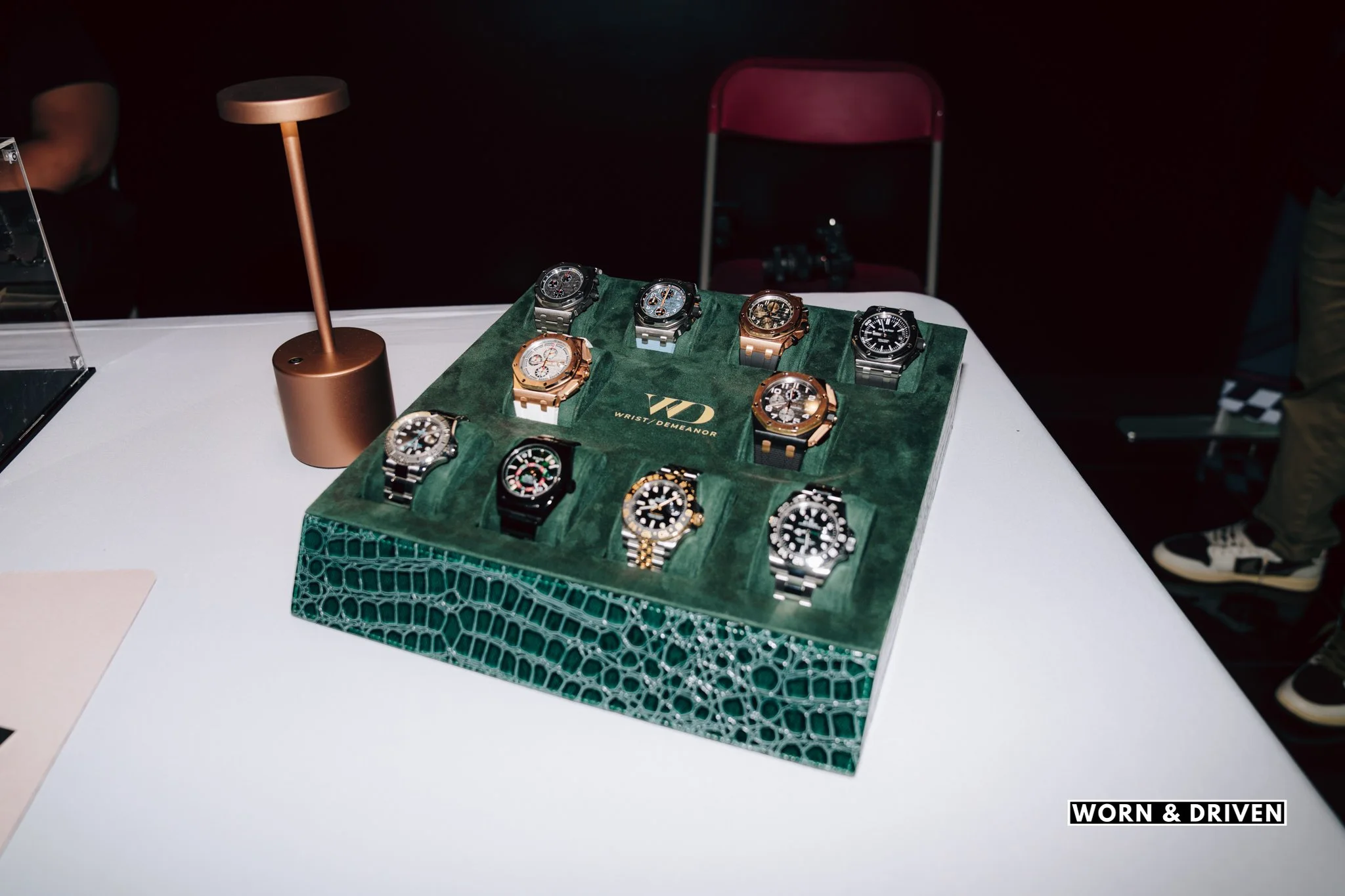
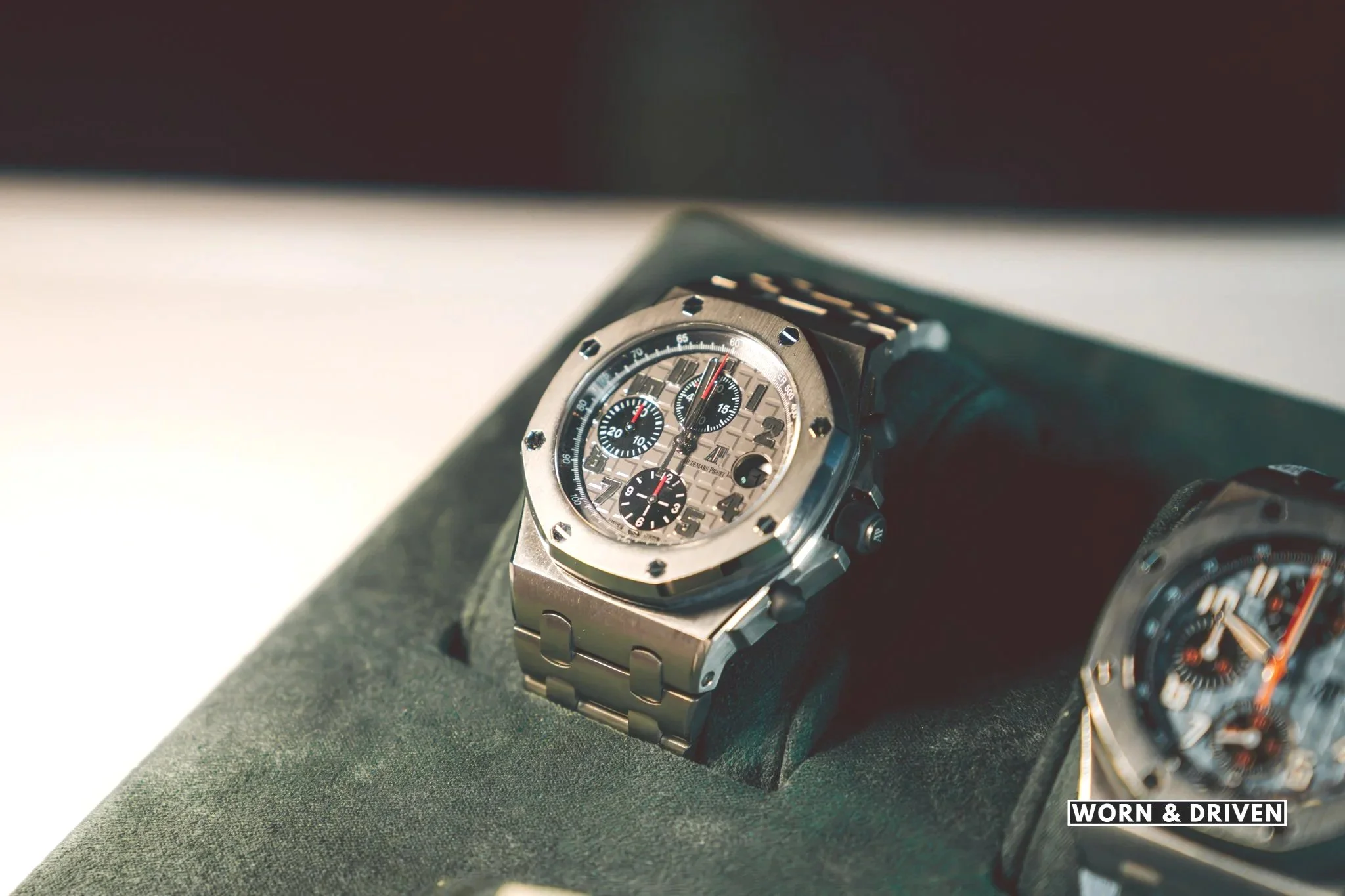
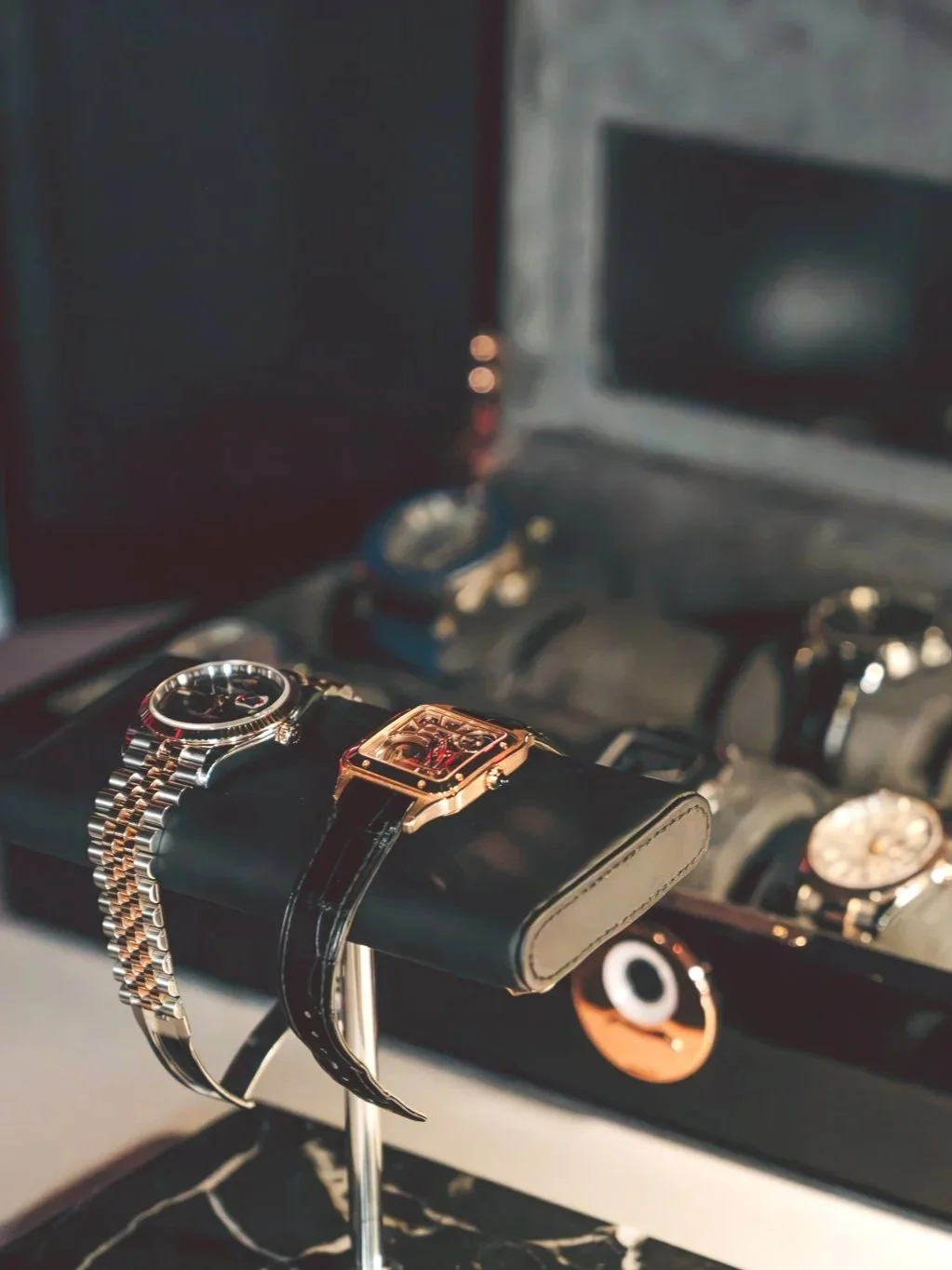
The assortment invited exactly what a good watch display should: stopping, looking closer, asking questions, and eventually trying to decide which piece you would take home if somebody suddenly removed the practical constraints.
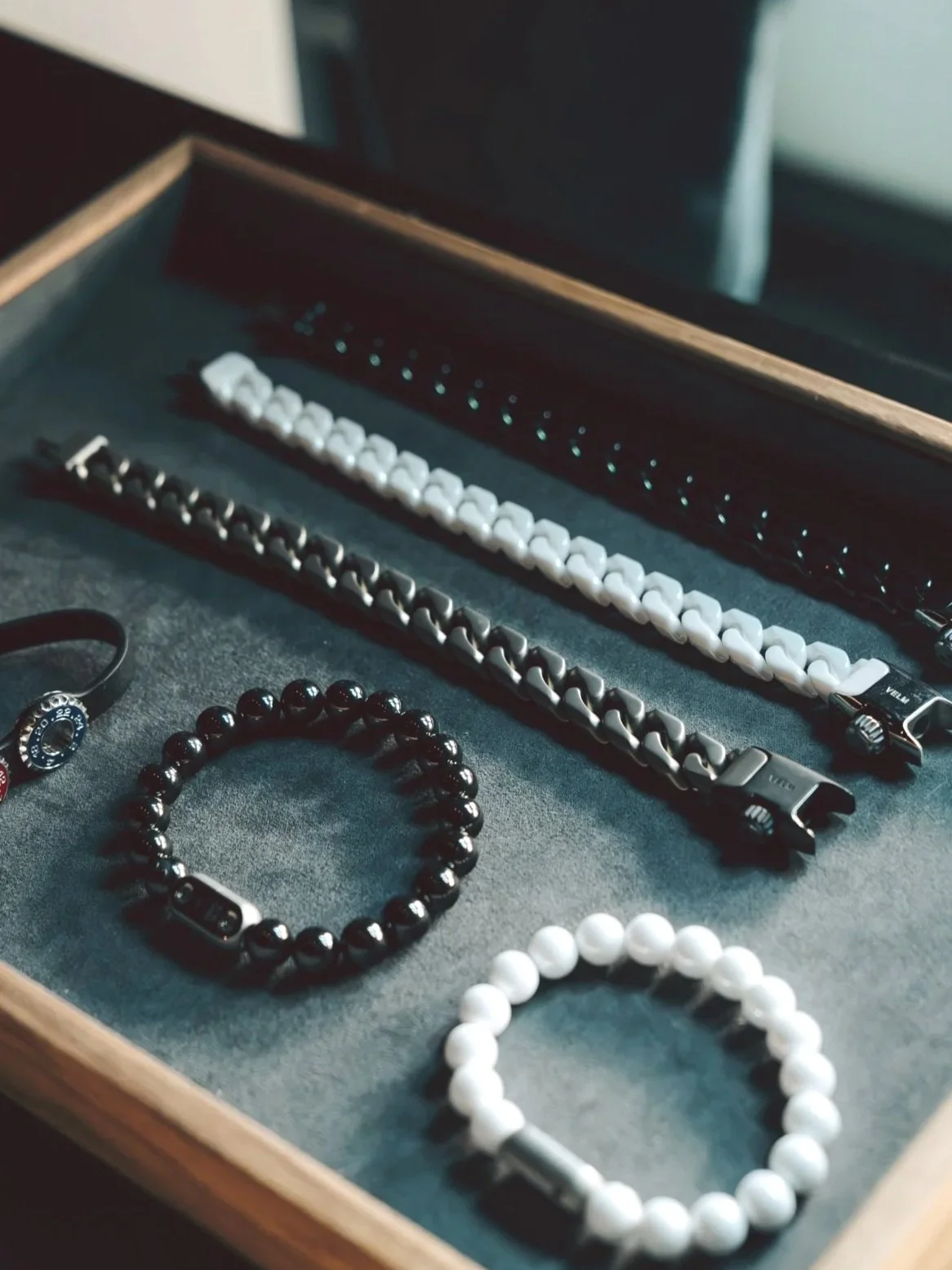
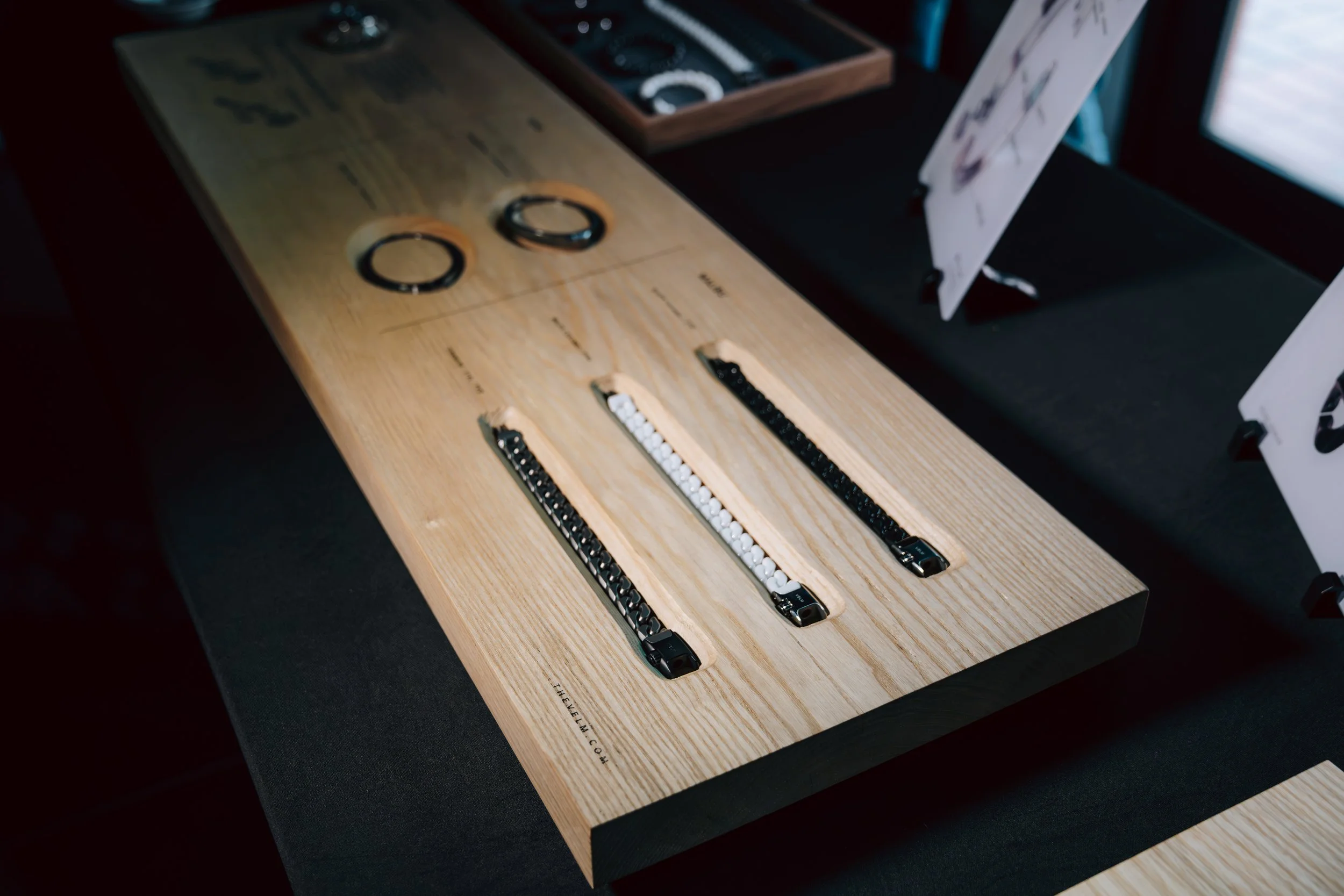
The other side of wearable design came from VELM, the Los Angeles-based accessories company founded around an intriguing proposition: applying some of the materials, precision, and engineering language associated with contemporary watchmaking to jewelry.
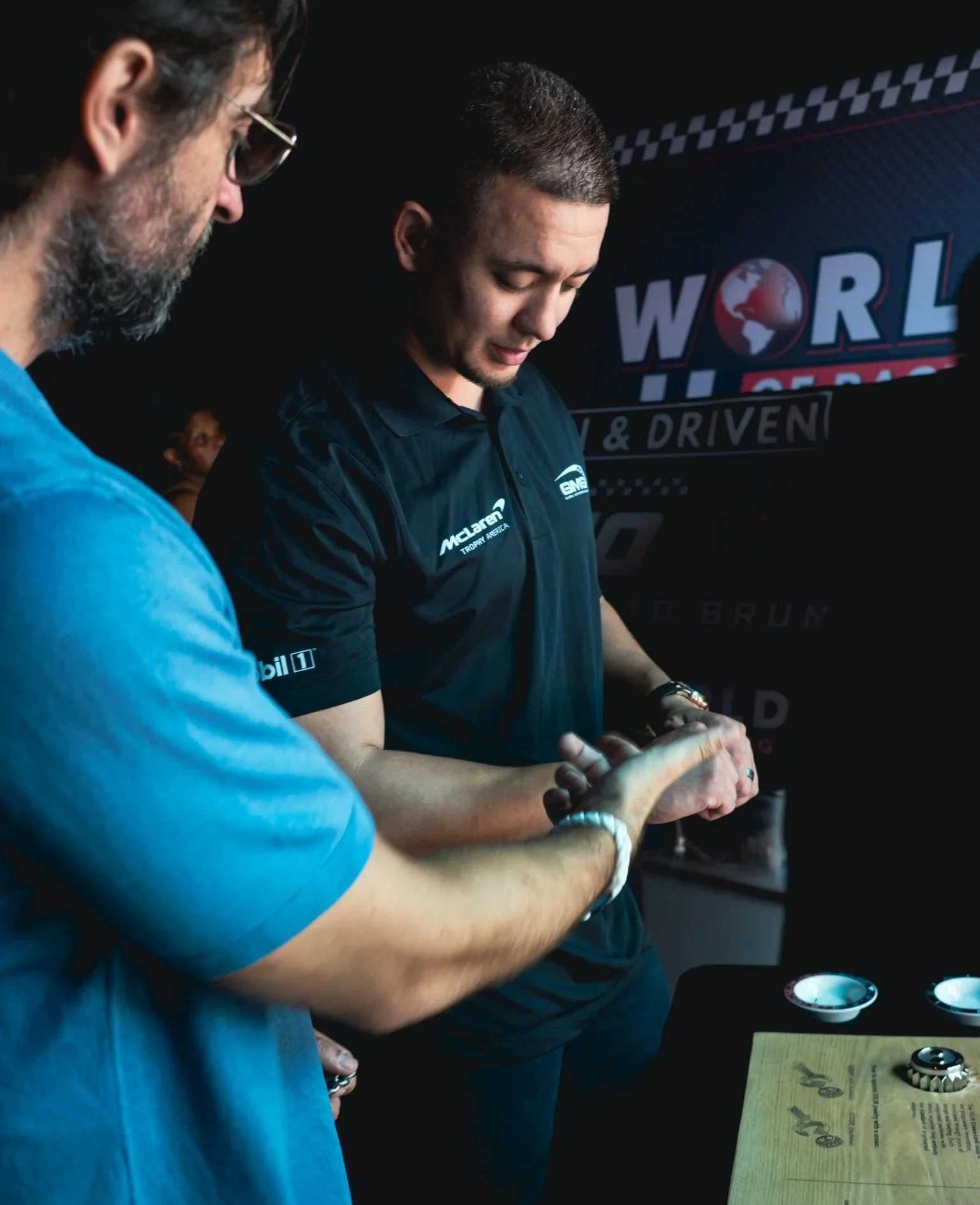
Kyle Anderson-Mape, comparing notes before the doors opened.
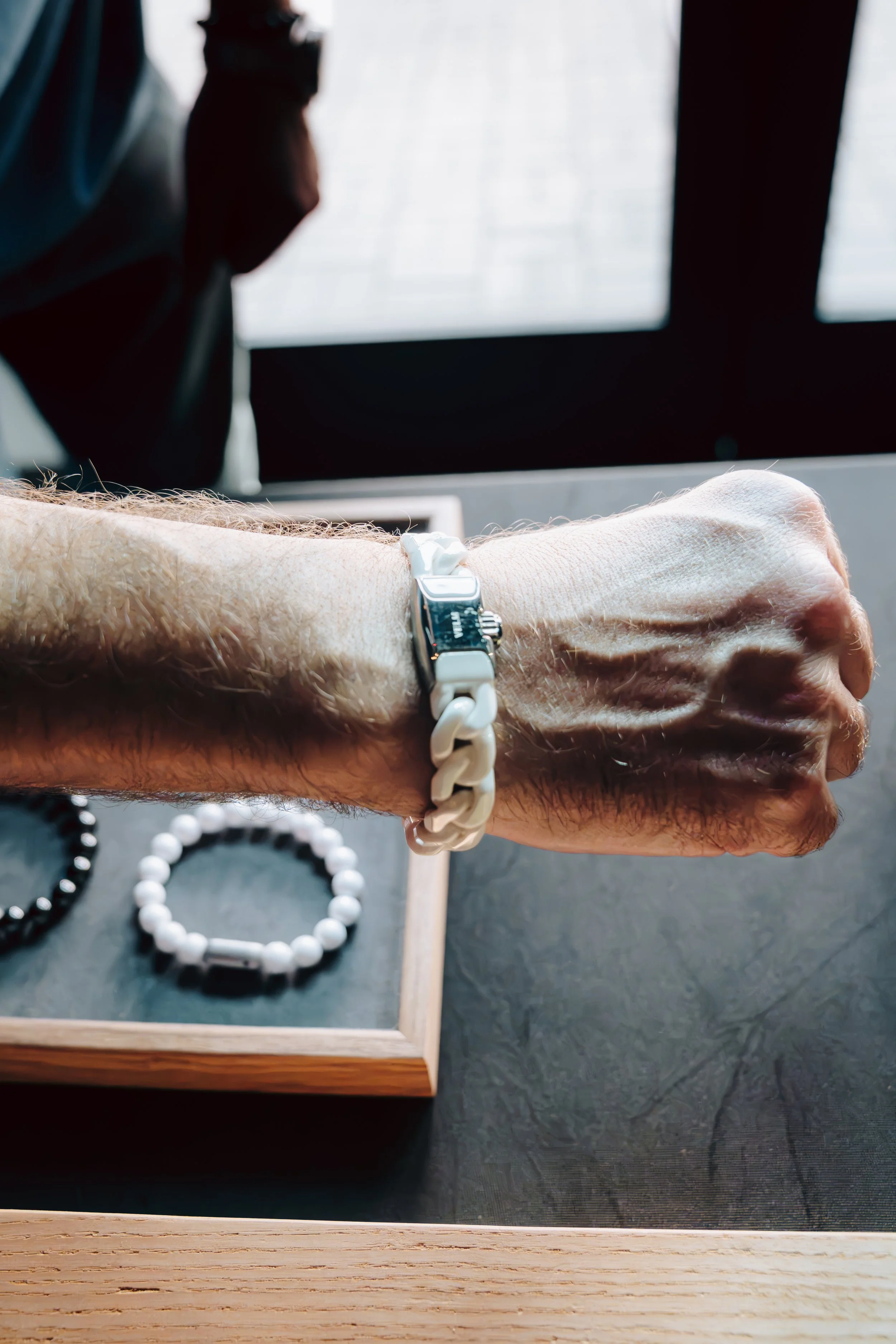
VELM works with materials including titanium, ceramic, stainless steel, and carbon fiber, producing bracelets and accessories that feel closer to engineered objects than conventional jewelry. VELM founder and CEO Vjekoslav Miloradovic was there alongside Anderson-Mape, giving guests an opportunity to handle the pieces rather than simply encounter them through photographs.
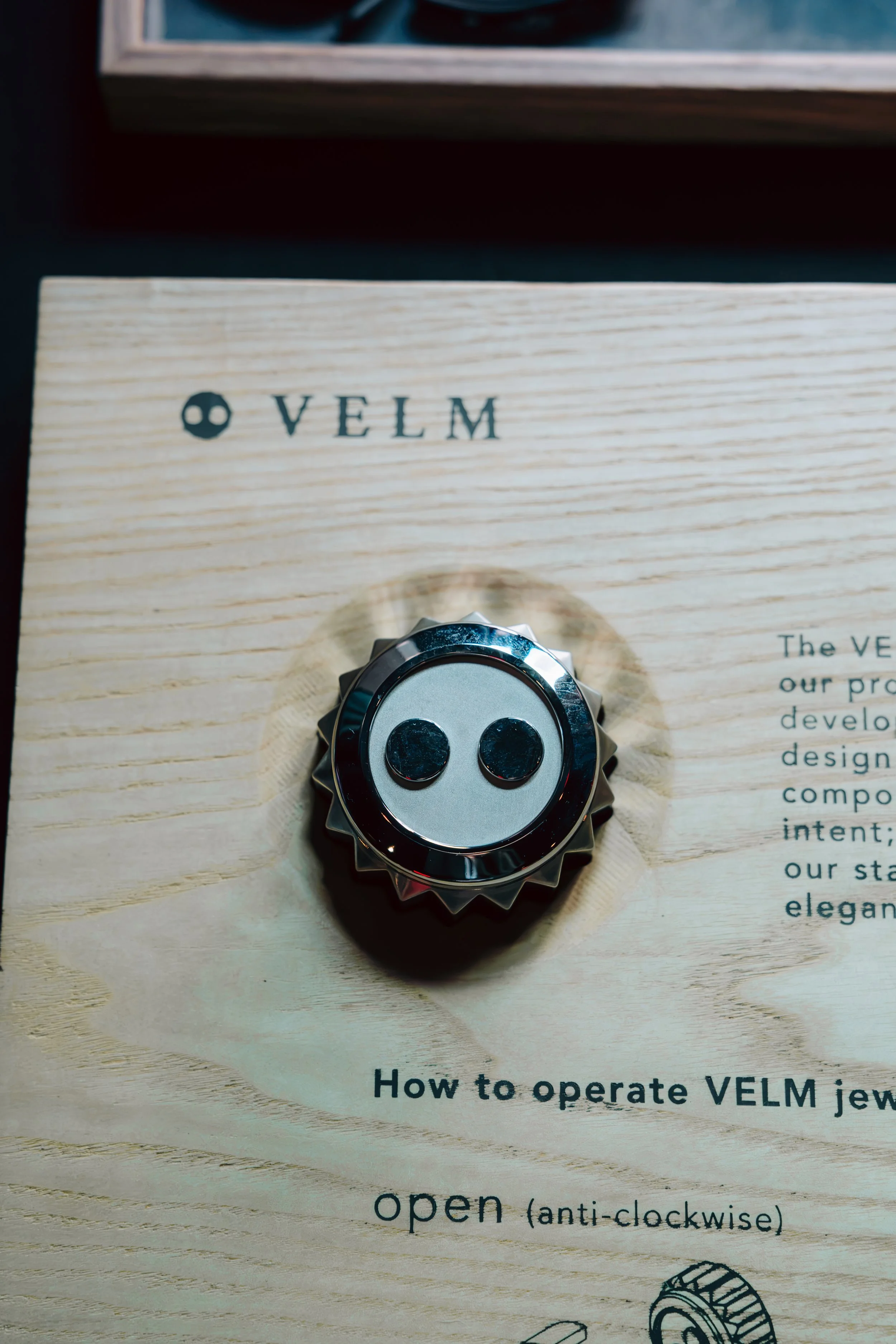
One object on the VELM display kept pulling me back, and ironically, it wasn't for sale.
It was a substantial dial-like display piece, metallic, surprisingly weighty in the hand, and visually difficult for me to leave alone. Eventually I asked Vjekoslav whether I could simply have it, or at least convince him to make another one for me.
I have not forgotten about it, Vjekoslav.
The bracelets themselves carried the same industrial character. Seeing them on a table is one thing. Seeing one on a wrist makes the watchmaking influence considerably easier to understand: scale, proportion, articulation, hardware, and materials all become part of how the object wears rather than merely how it photographs.
Then it was time to stop talking about machines and start driving them.
World of Racing was more than the address for the afternoon. Founded by Bradley Dodds, the Tustin venue served as WORN & DRIVEN's Official Racing Experience Sponsor and is built around full-motion simulators, connected racing, and live timing — infrastructure that gave Chrono Attack its competitive center. The simulators had a way of interrupting everything around them: a lap could pull people toward a screen, turn spectators into competitors, and give the room something to chase together.
Chrono Attack turned that infrastructure into a straightforward competition: same environment, same objective, fastest laps win.
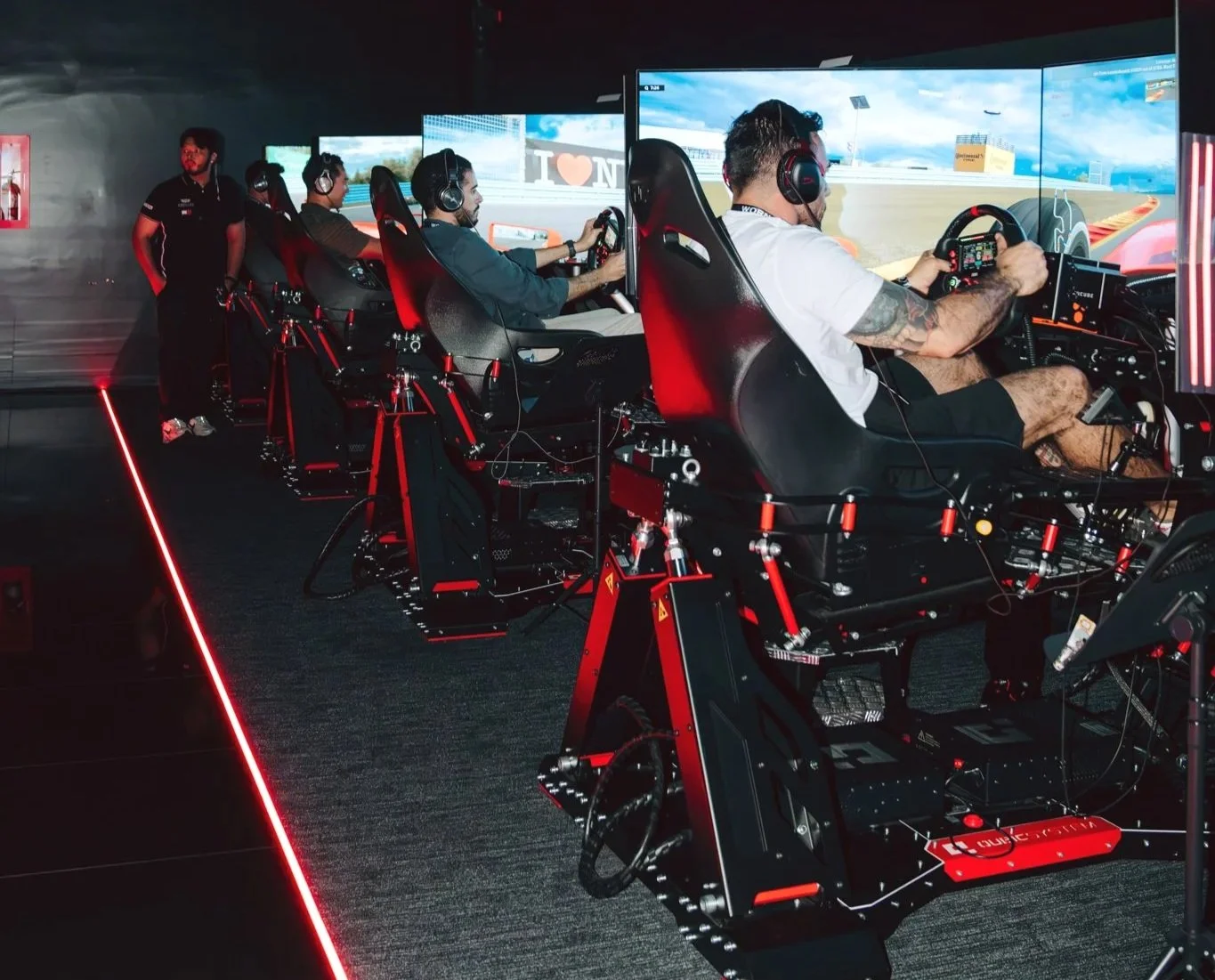
World of Racing's sim bay, mid-session.
I'm not a professional racing driver, nor would I pretend to be one. But I spend enough time around performance cars, and enough time driving them, to have a reasonable sense of what I'm doing behind a wheel. I expected at least some of that intuition to translate immediately.
It did not.
Sim racing was considerably more difficult than I expected.
In an actual car, there is an enormous amount of information you process almost unconsciously: weight moving through the chassis, braking forces, acceleration, tire behavior, changes in grip, and the physical sensation of the car rotating underneath you. A simulator reproduces portions of that experience, particularly sophisticated motion equipment like the rigs at World of Racing, but the sensory equation is still different. The result, at least for me, was having to recalibrate instincts that normally feel automatic. “Knowing that did not make me any faster.”
That difficulty also explains why serious simulation has become useful beyond entertainment. Professional drivers and racing organizations use simulator work as one component of training and preparation because repetition, braking points, racecraft, and circuit familiarity can be practiced without putting a physical race car on track.
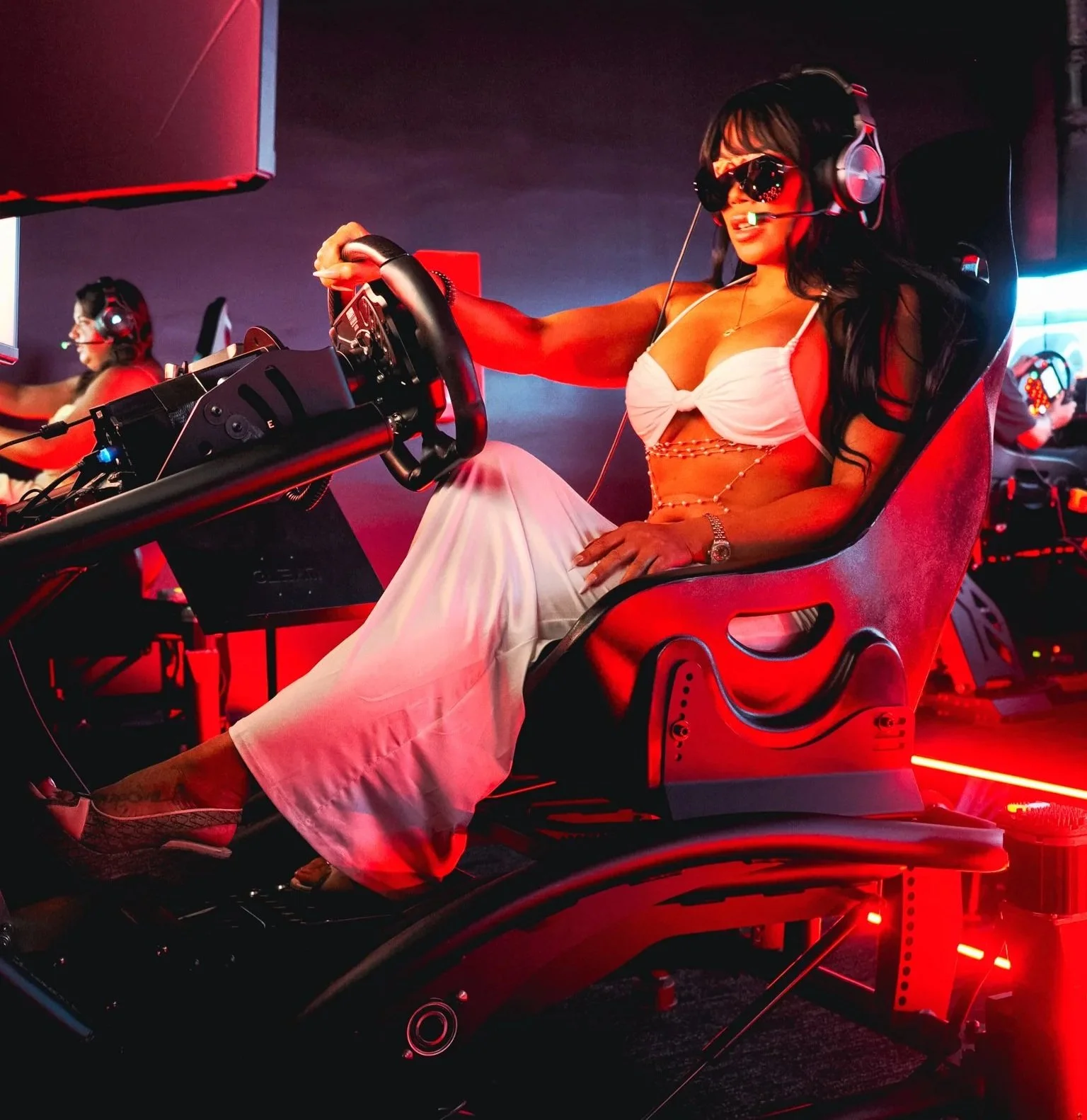
Full-motion, sunglasses on.
What I particularly liked was how little ceremony surrounded participation. People arrived dressed for the social side of the afternoon and then simply got into the rigs and competed. The room didn't divide neatly into racers and spectators, car people and watch people, men and women. If you wanted a lap time, there was a seat waiting.
Eventually, of course, the timing board had the final word.
When Chrono Attack was finished, three competitors had separated themselves from the field and earned their places on the podium.
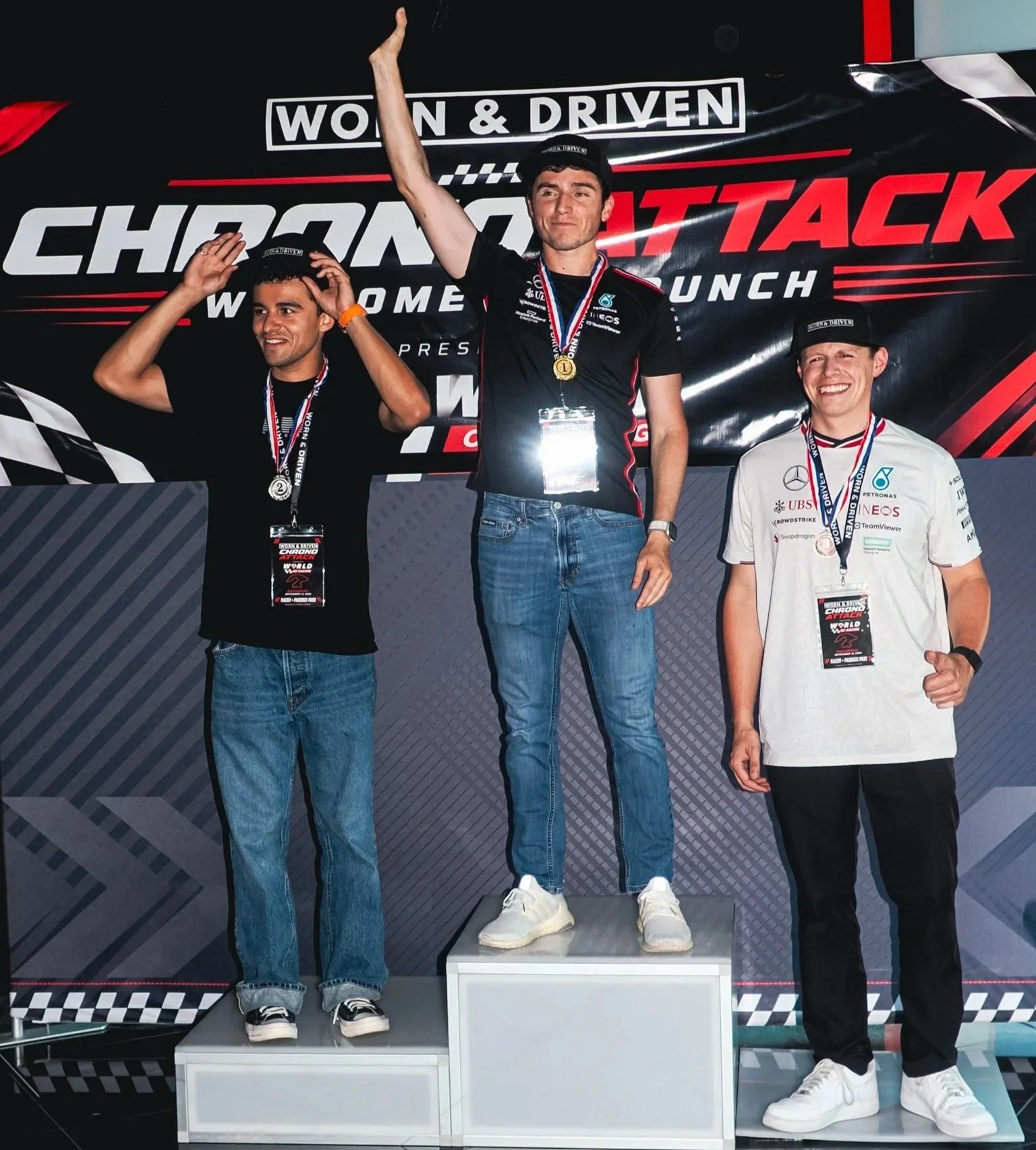
Gold, silver, and bronze — the afternoon's fastest three.
But ending the story there would make Chrono Attack sound more serious than the afternoon actually felt.
There was a competition, certainly. There were watches worth stopping for, VELM pieces being passed from hand to hand, and plenty of conversation about cars.

The lights stayed red long after the racing stopped.
The music stayed on. Conversations continued. The DJ kept working, and the space that had spent part of the afternoon sounding like a virtual paddock became something closer to a party.
By then, the timing board no longer mattered. People who had spent the afternoon chasing tenths were standing around talking, laughing, and dancing. Watches were still changing hands. Conversations that had started hours earlier hadn't quite finished.
Maybe that was the better measure of Chrono Attack.
But when the podium was finished and there was nothing left to win, people stayed anyway.
It was great to see that an event like this was about more than just the fun, the cars, and the watches. It was also about the impact we could make within our community.
WORN & DRIVEN donated a portion of the event proceeds to their nonprofit partners: Drive Toward a Cure, Junior Achievement of Southern California and Inland Empire, and the Marconi Automotive Museum & Foundation for Kids.
It was a reminder that what we're building extends beyond the experiences themselves. Our Club is creating meaningful connections while making a positive impact in the communities around us.
Event Recognitions
Bradley Dodds - World Of Racing
Kyle Anderson-Mape - Founder at Wrist Demeanor
Vjekoslav Miloradovic - Founder at VELM
JM Felix - CEO | Founder - Felix Security
Michael Sofer - Co-CEO - Felix Security
Tyler Cruz - DJ
Andrue Velarde - Host
Drive Toward a Cure - Nonprofit Partner
Junior Achievement of Southern California and Inland Empire - Nonprofit Partner
Marconi Automotive Museum & Foundation for Kids - Nonprofit Partner
Media:
Brianna - Photographer
Josh Joyner - Videographer