

No. 002 Was Made to Be Worn
THE SECOND OF TWENTY-FIVE
By Izu Okpara
Twenty-five is a small enough number to make you careful.
It makes the box feel more important. It makes fingerprints noticeable. It makes the first scratch seem like something to prevent rather than something inevitable. Add an individual number to the caseback and the instinct becomes stronger still.
Preserve it. Protect it. Keep it exactly as it was.
Which is a curious way to think about a wristwatch.
Watches were never meant to observe life from inside a box.

At Chrono Attack, my name was called.
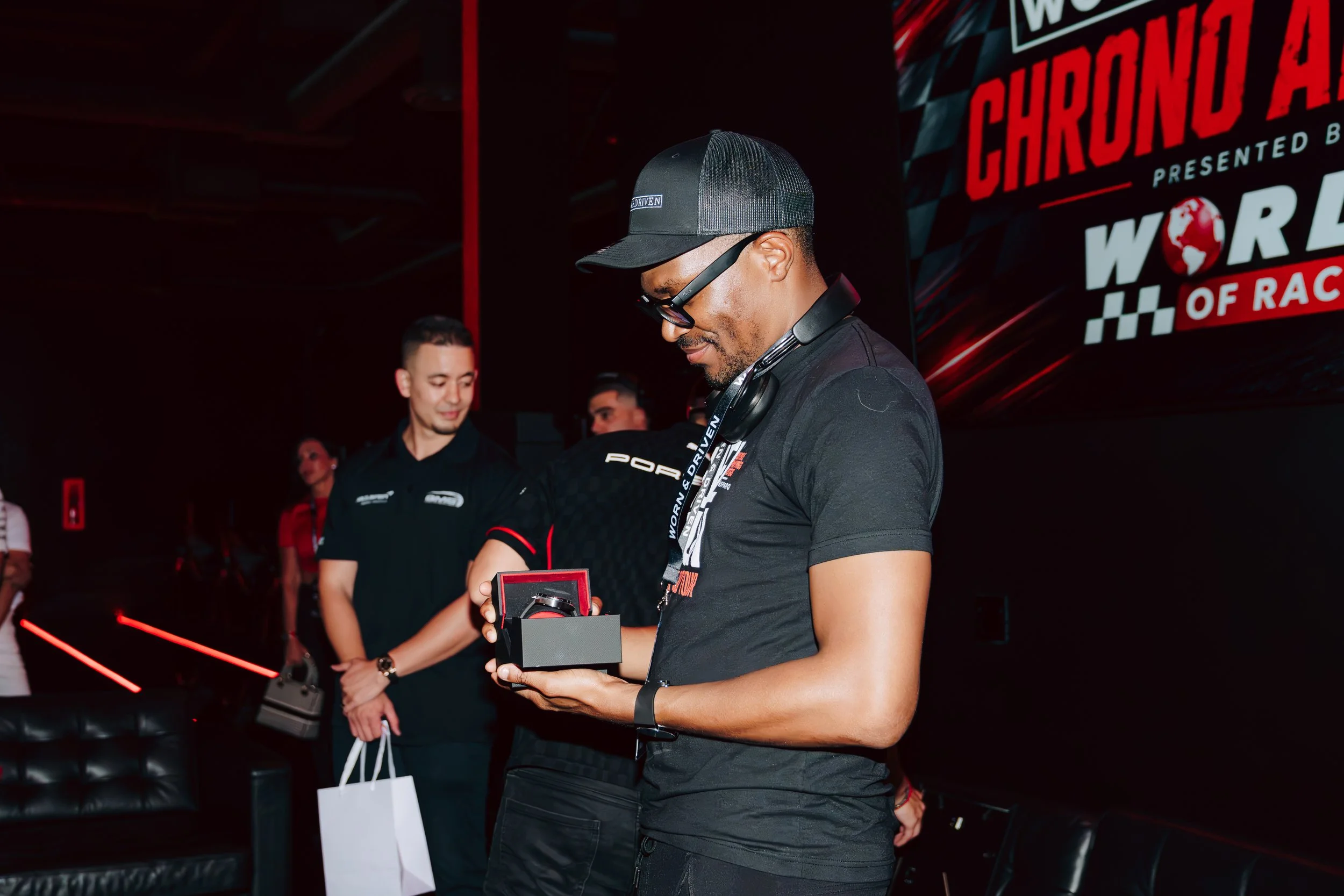
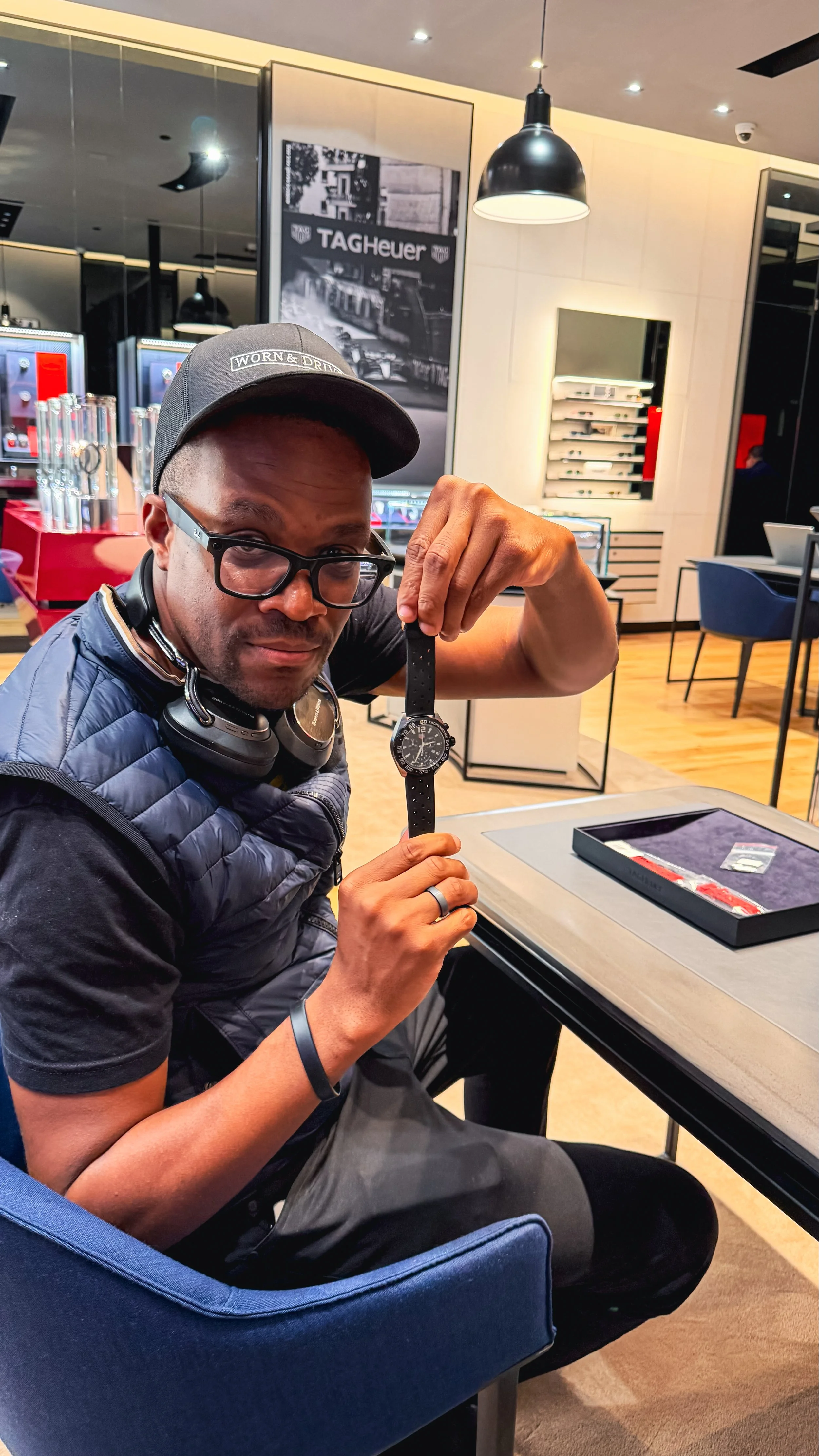
Cameras began to rise as the box opened. I knew what was coming. Inside was the TAG Heuer WORN & DRIVEN Collector’s Edition, a limited series of just 25 individually numbered pieces, 01 through 25.
No. 002 had been spoken for almost from the beginning.
Knowing didn't diminish the moment.
Inside the box was 002.
In one photograph from that afternoon, the watch is still there, only partially revealed.
Steel. Black. A trace of red. A few moments later, it was on my wrist.



And then something useful happened.
Attention moved on.
There were simulators waiting. Conversations resumed. Another race began. Chrono Attack wasn't going to stop because I had a new watch.
Neither was I.

A little later, I found myself trying to drive a Formula 1 car.
Virtually, fortunately.
The simulator had already exposed the considerable distance between driving quickly and believing you know how to drive quickly. The F1 car widened it considerably.
A few laps were enough.
Knowing how to drive did not make me any faster.
Somewhere in the middle of all of that, 002 stopped being the object everyone had just been looking at.
It was simply on my wrist
Perhaps that's the first threshold a collectible crosses.
Not when the box opens.
When attention moves somewhere else.
There were words on the watch that I understood long before I understood what sat behind them.
Formula 1.
The name goes back to 1986, the year TAG Heuer itself began.
It was the first collection introduced under the new name, following the union of Techniques d'Avant-Garde and Heuer, and it arrived looking deliberately unlike the conventions of traditional Swiss watchmaking.
Color. Quartz. Motorsport.
A different kind of beginning.
That last part feels important.
Heuer's relationship with racing was already decades old. Timing and motorsport had become inseparable from the company long before TAG entered the name. Formula 1 did not create that relationship. It inherited it.
But 1986 marked something else.
A new name. A new collection. A beginning.
I knew the words on the watch long before I knew the history behind them.
I learned that afterward.
I prefer it that way.
There is a peculiar pressure around watches to know before you own. References. Movements. Calibers. Provenance. The significance of a name on a dial. Enough vocabulary exists to make the uninitiated feel as though admission requires an examination.
Ownership can work in the opposite direction.
Sometimes the object comes first.
Then curiosity.
Then history.
The longer I wore 002, the more I wanted to understand what I was actually wearing.
And I did wear it.
That distinction became important surprisingly quickly
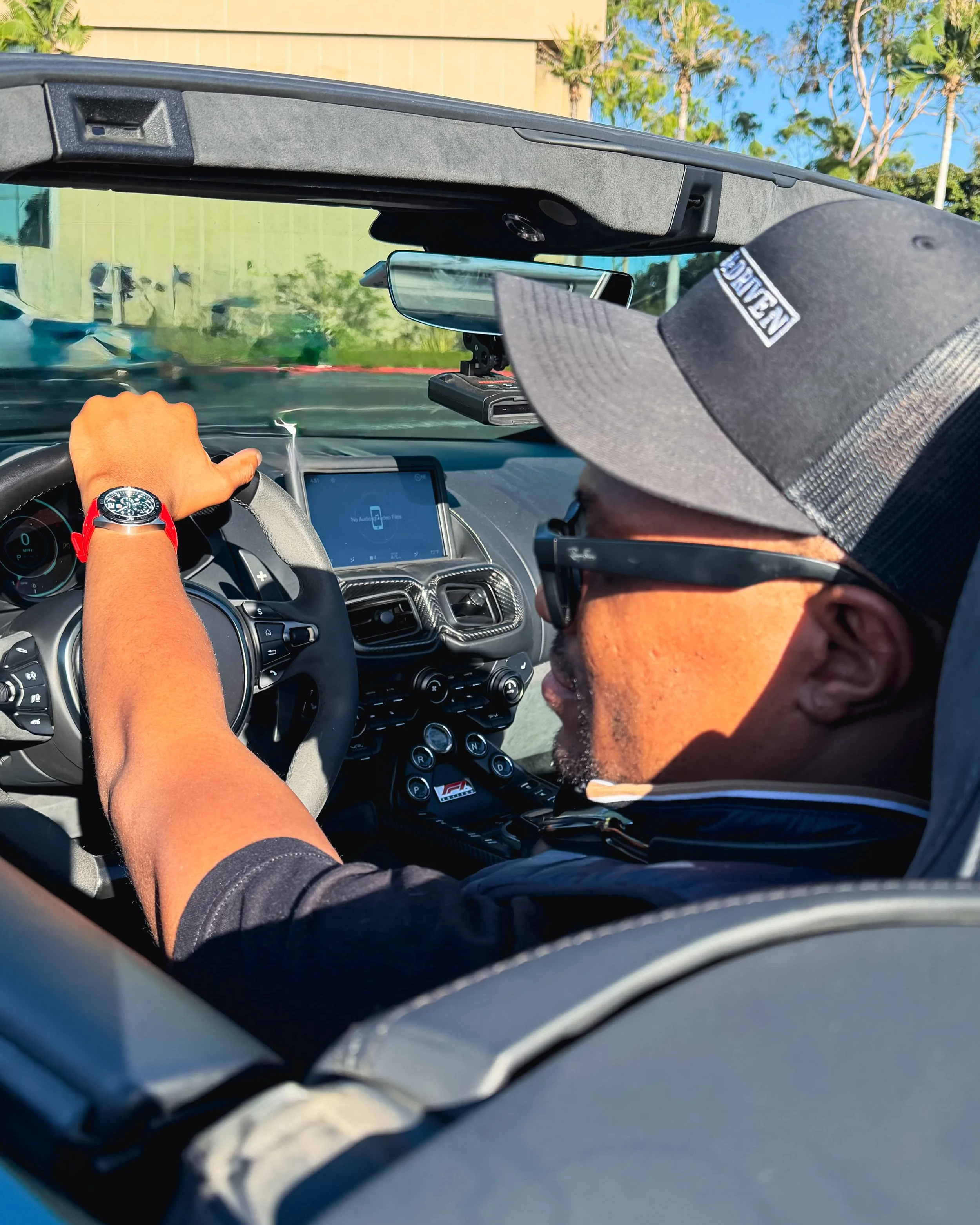
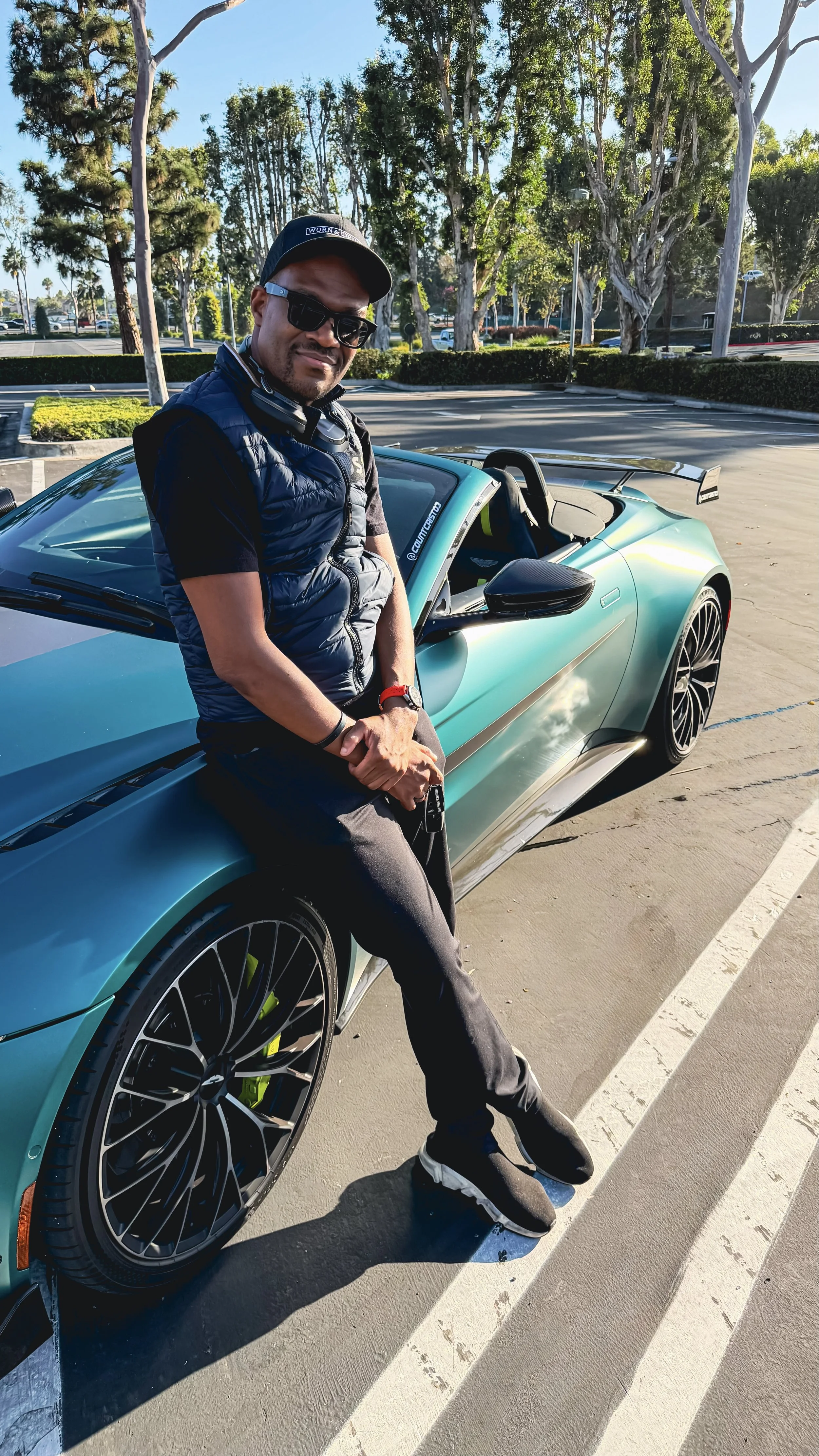
Some watches continually remind you that they are there. 002 doesn't. It settles onto the wrist and stays there. The strap follows the wrist closely, the case has enough substance to feel purposeful without becoming cumbersome, and after enough hours the watch stops requiring attention.
That may be the highest compliment I can give something intended to be worn.
It disappears until you look for it.
Then it doesn't.
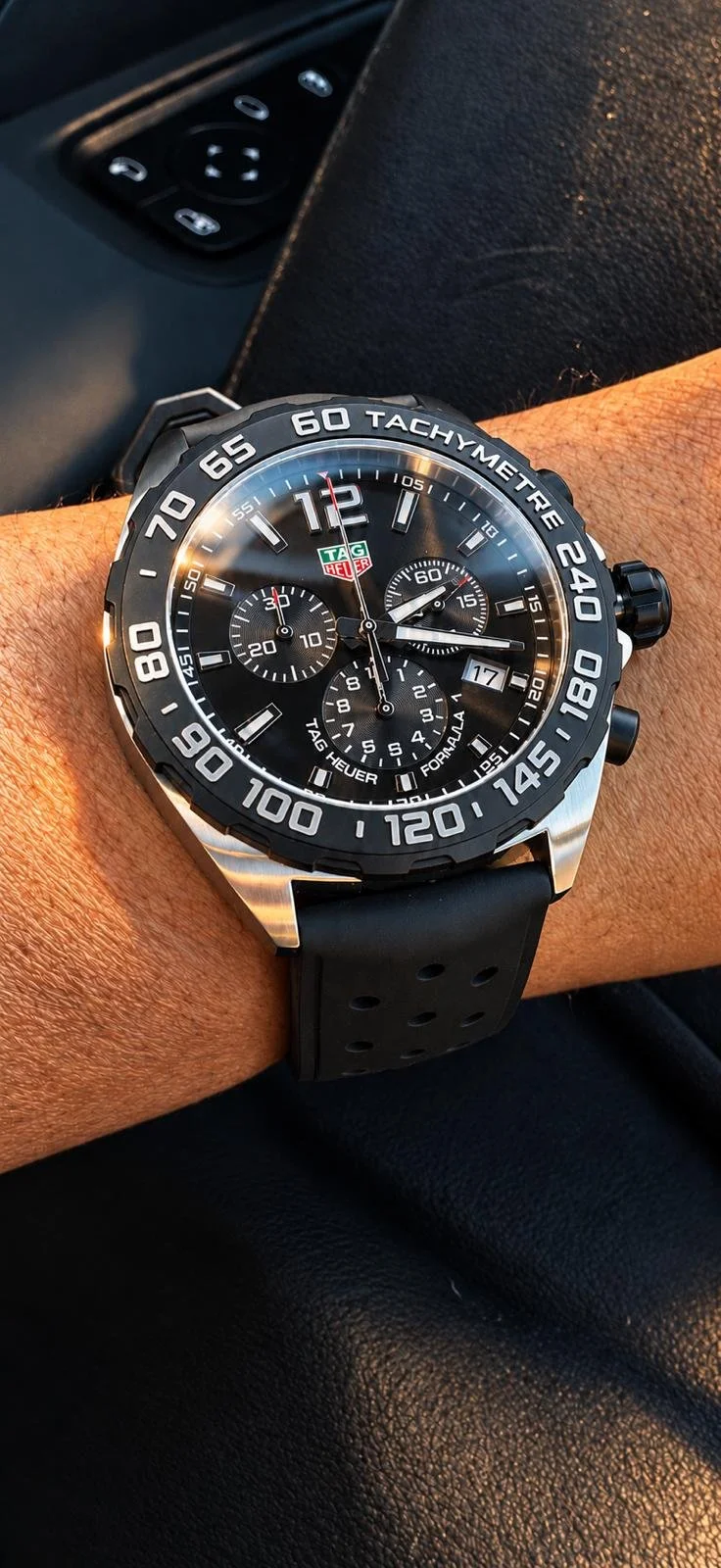
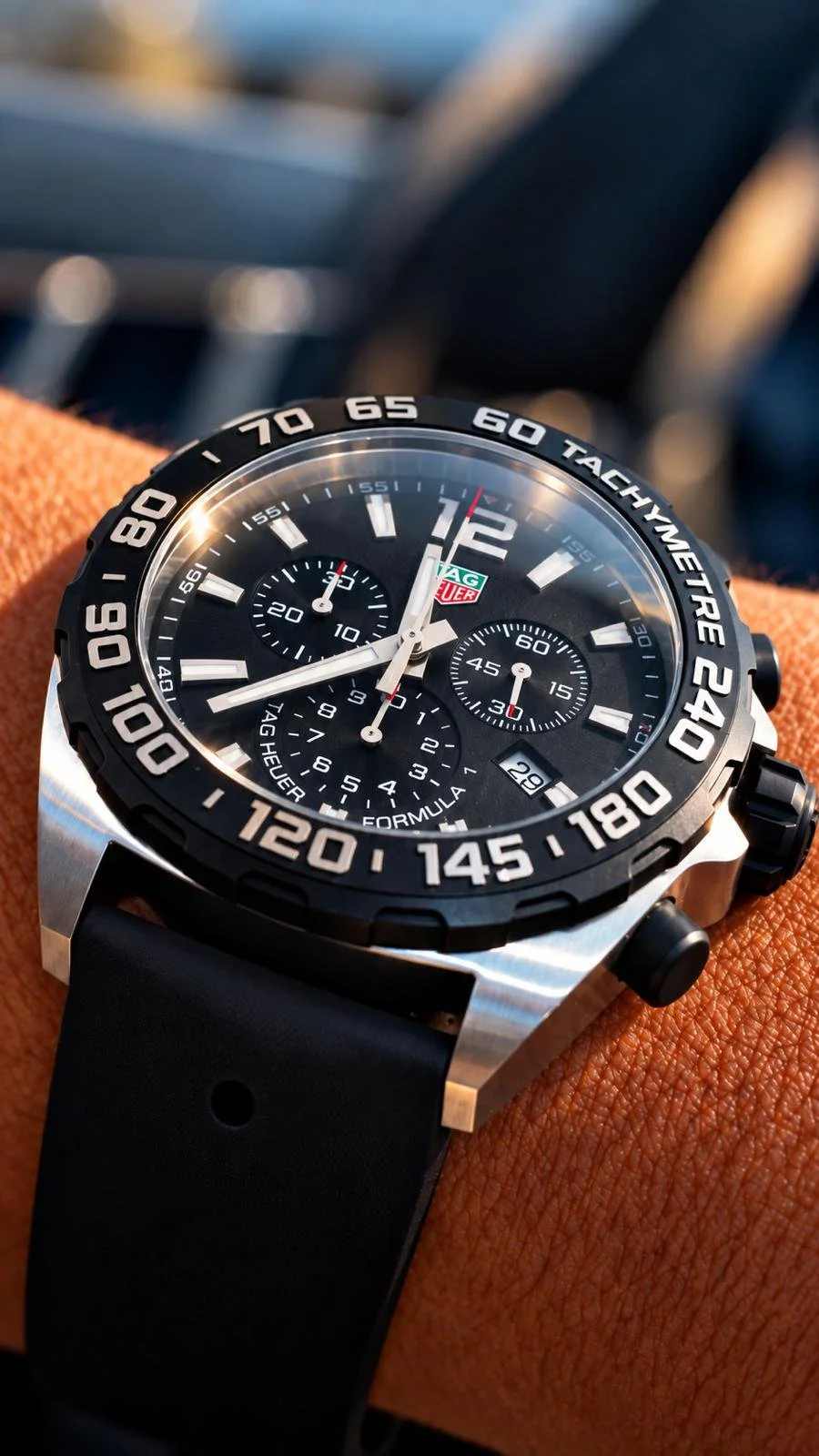
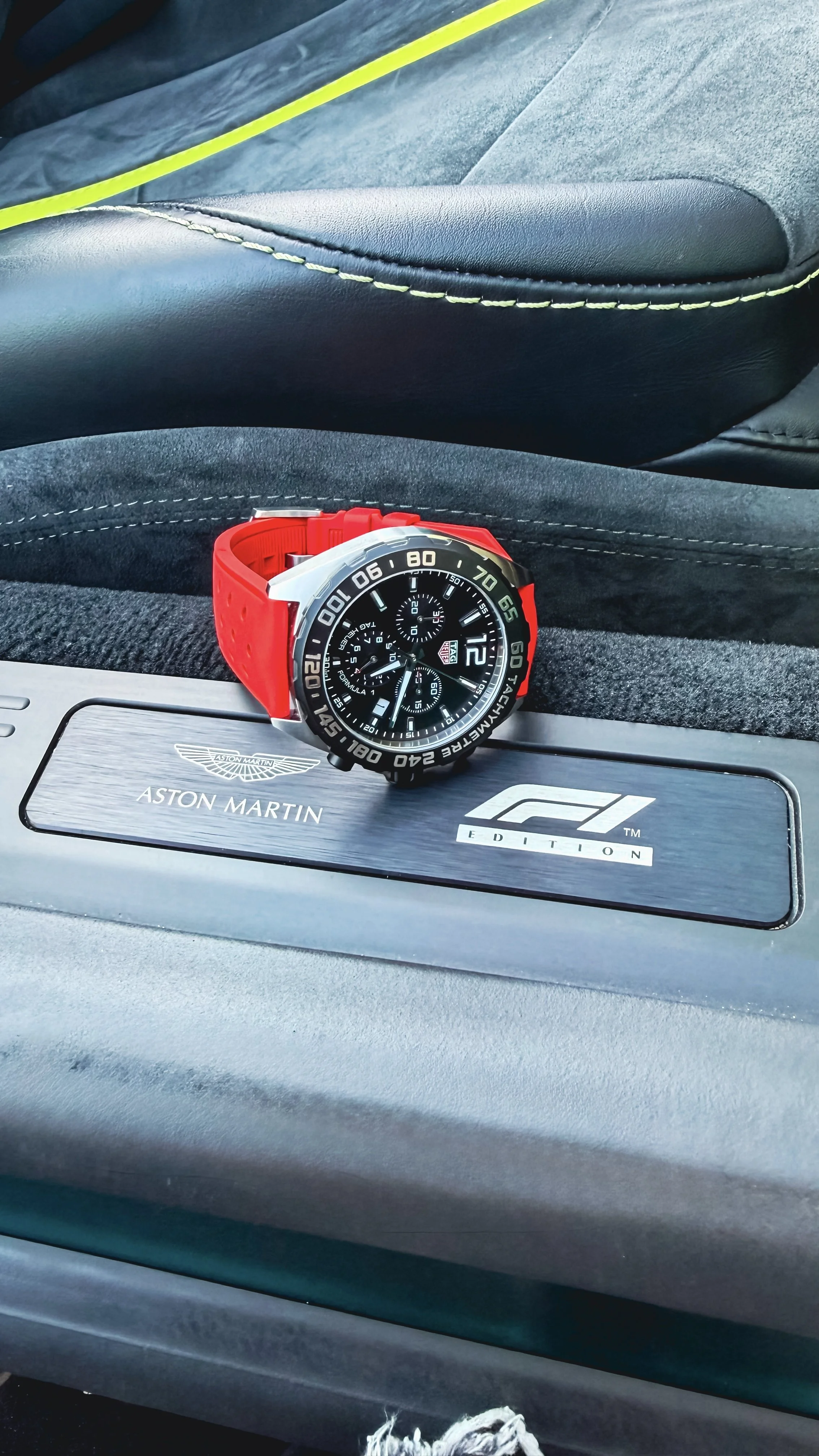
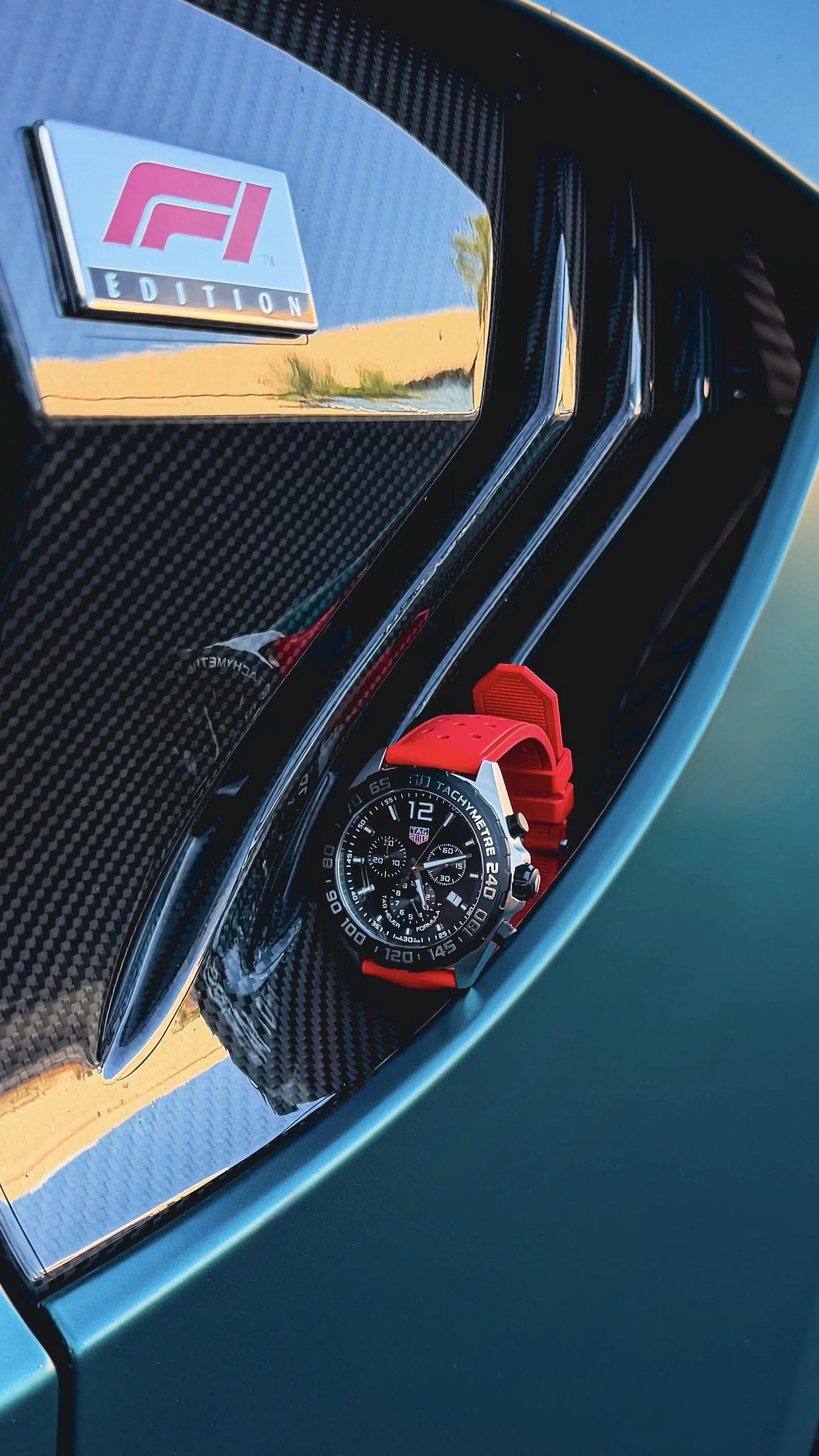
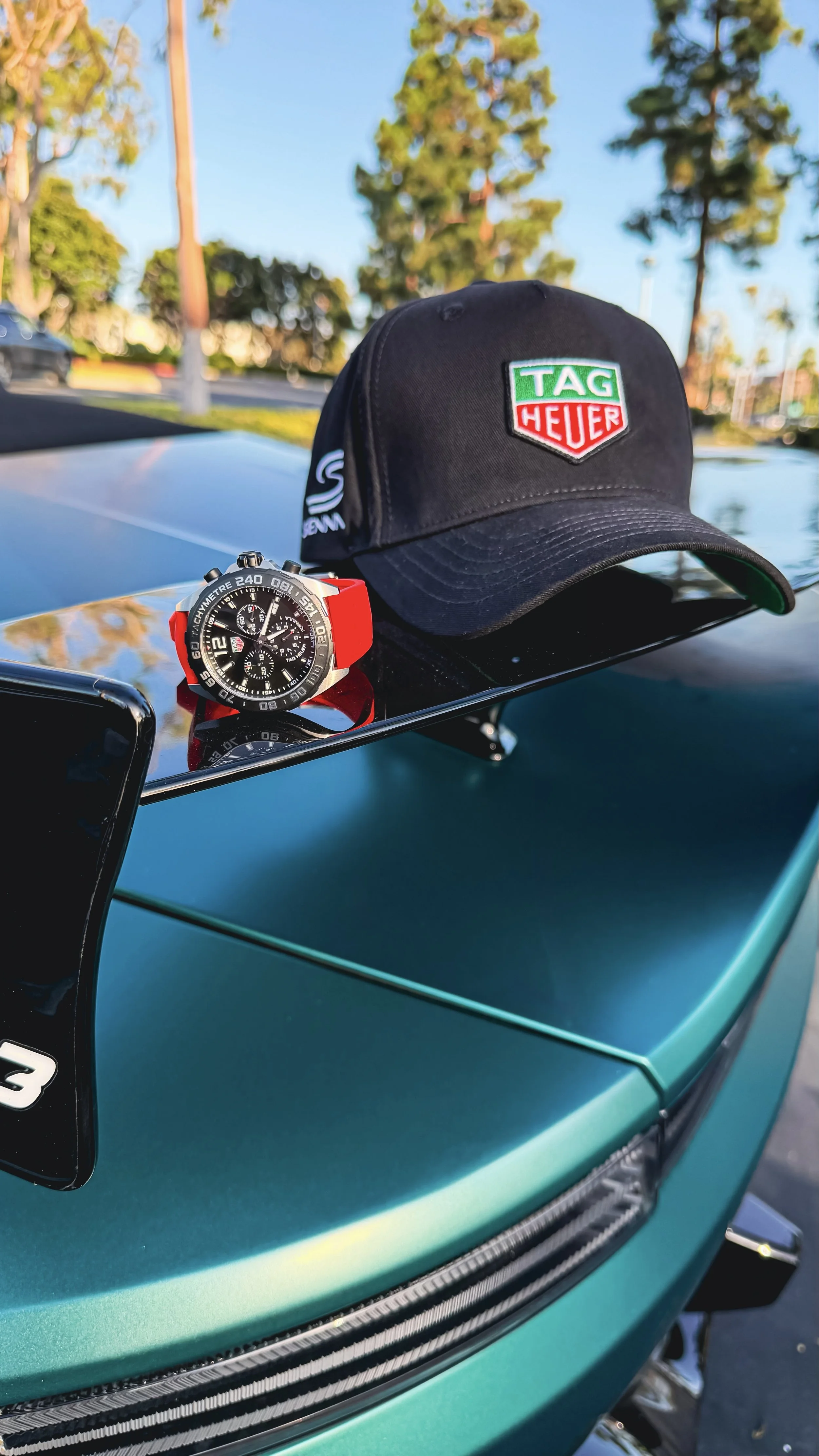
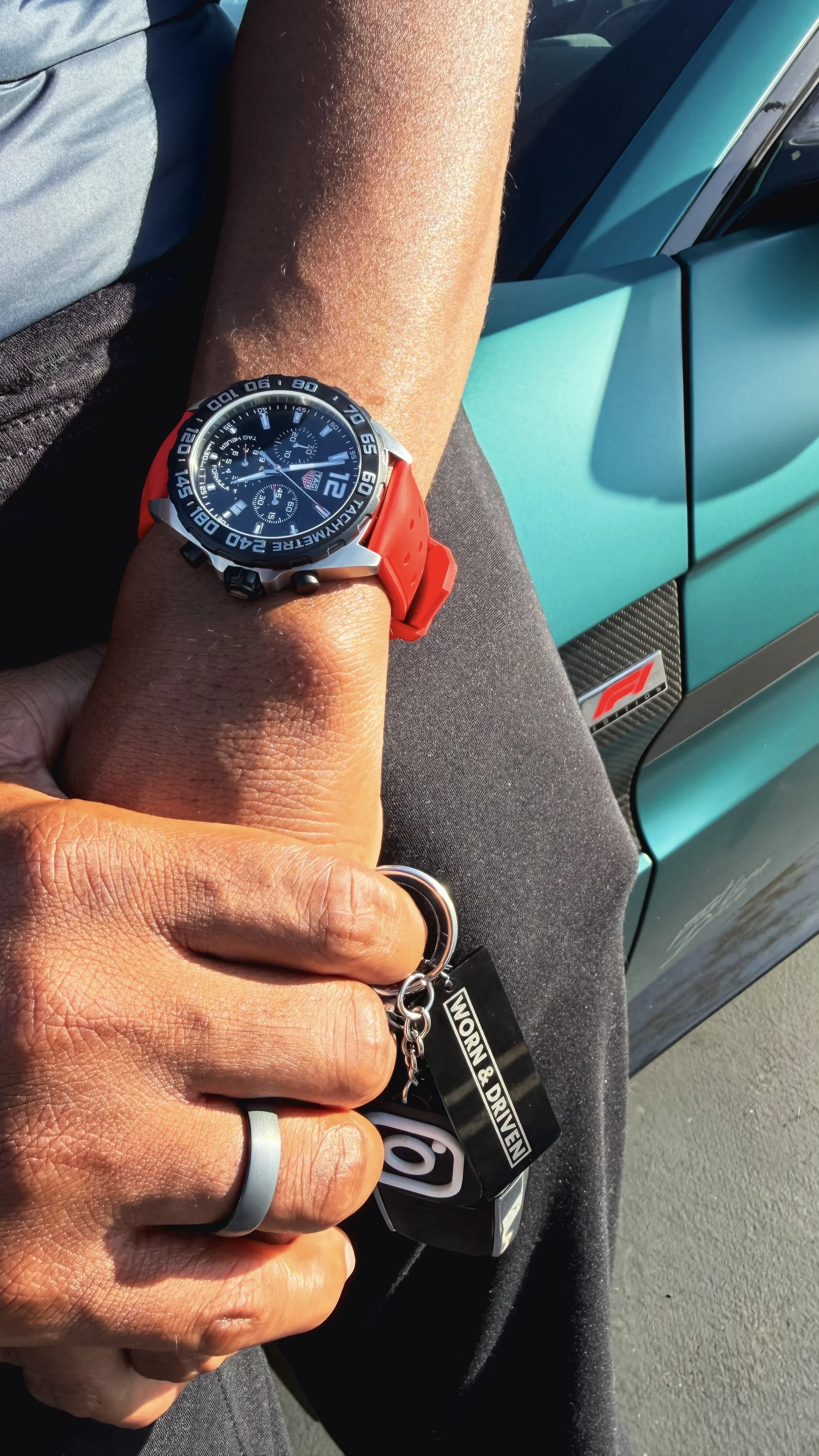
The black dial, oversized twelve, tachymeter bezel and flashes of red give it enough presence that a glance downward still feels deliberate.
There is nothing particularly shy about it.
Nor should there be.
The Formula 1 was never conceived as a timid watch. From its earliest years, color was part of its vocabulary. The original pieces arrived in combinations that would have looked almost insolent beside more conservative Swiss watches.
That history would become useful later.
For a while, 002 stayed exactly as it arrived.
Black was correct.
Then ownership began to interfere.
There is a point with certain objects when preservation stops being the only form of respect. Preference enters. A decision is made.
We understand this easily with cars.
The object can remain entirely itself while slowly acquiring choices that could only belong to its owner. A wheel. A specification. A piece of trim. Something small enough that another person might question why it mattered.
It matters because you chose it.
002 went back to TAG Heuer.
It came back red.
Same watch.
Different posture.
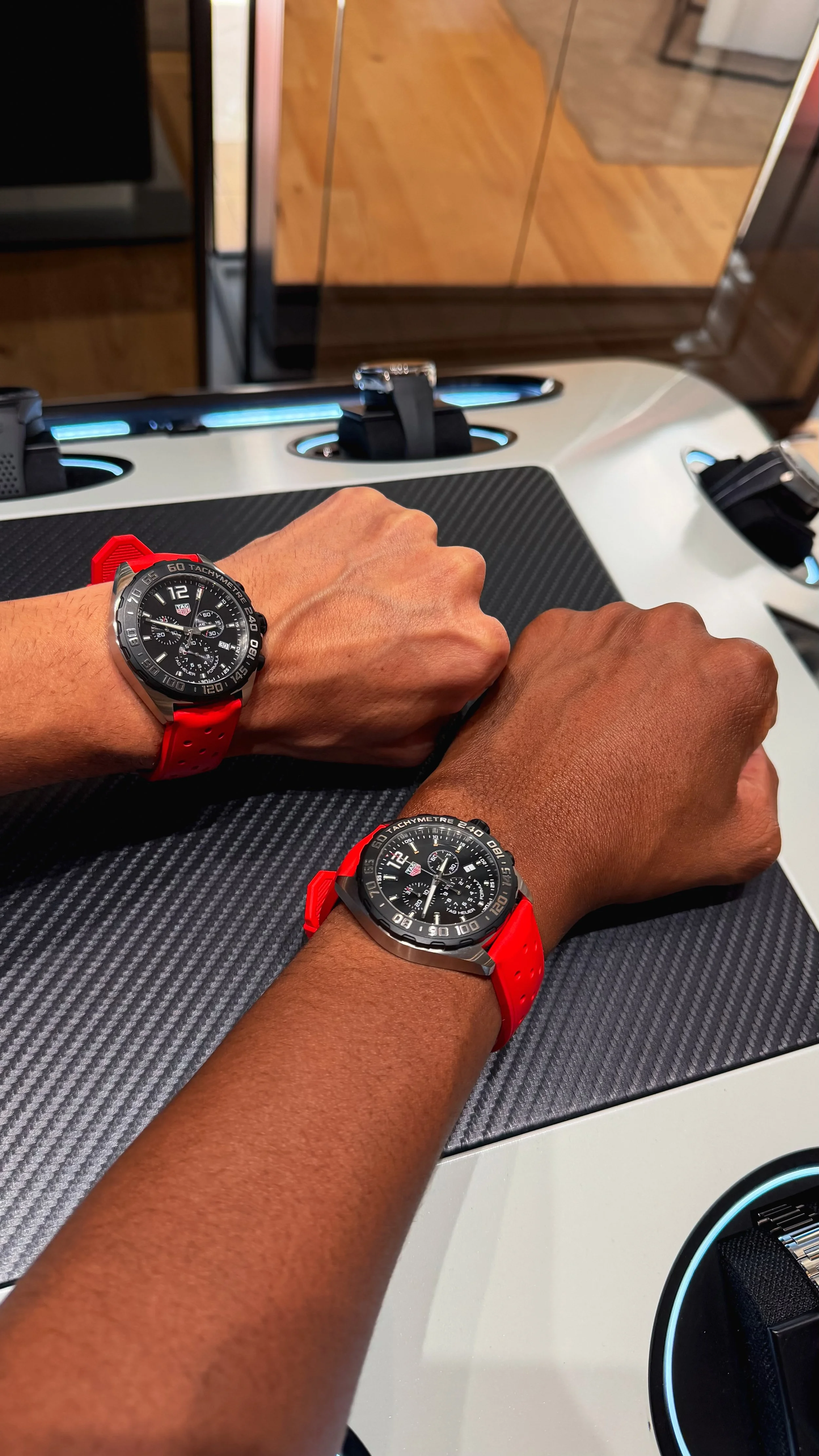
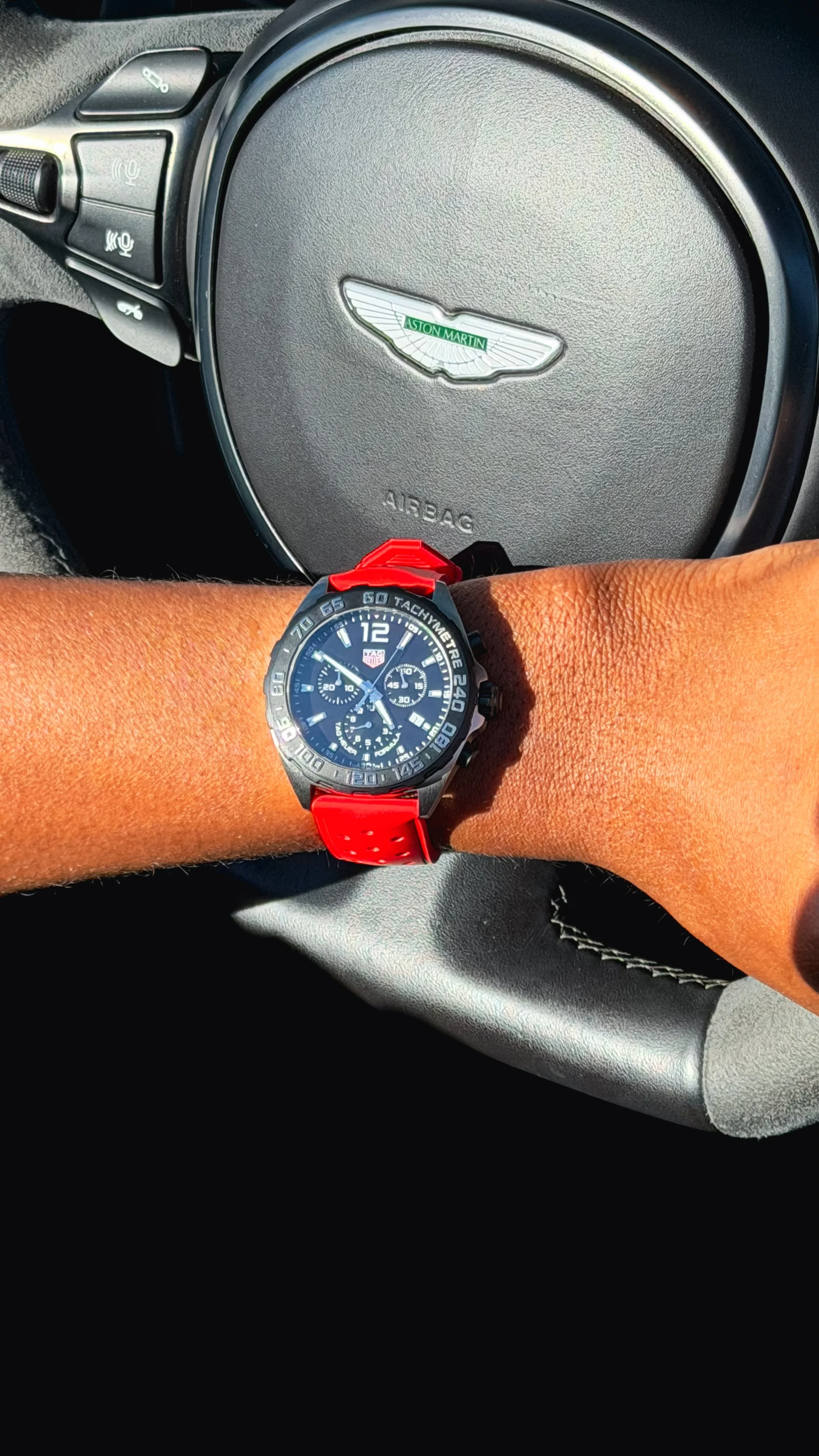
The change was immediate without being fundamental. Steel remained steel. The black dial remained black. The small red details that had always been there suddenly had something answering them from the wrist.
Forty years after those first Formula 1 watches arrived unapologetically dressed in color, red did not feel particularly foreign.
If anything, it felt familiar.
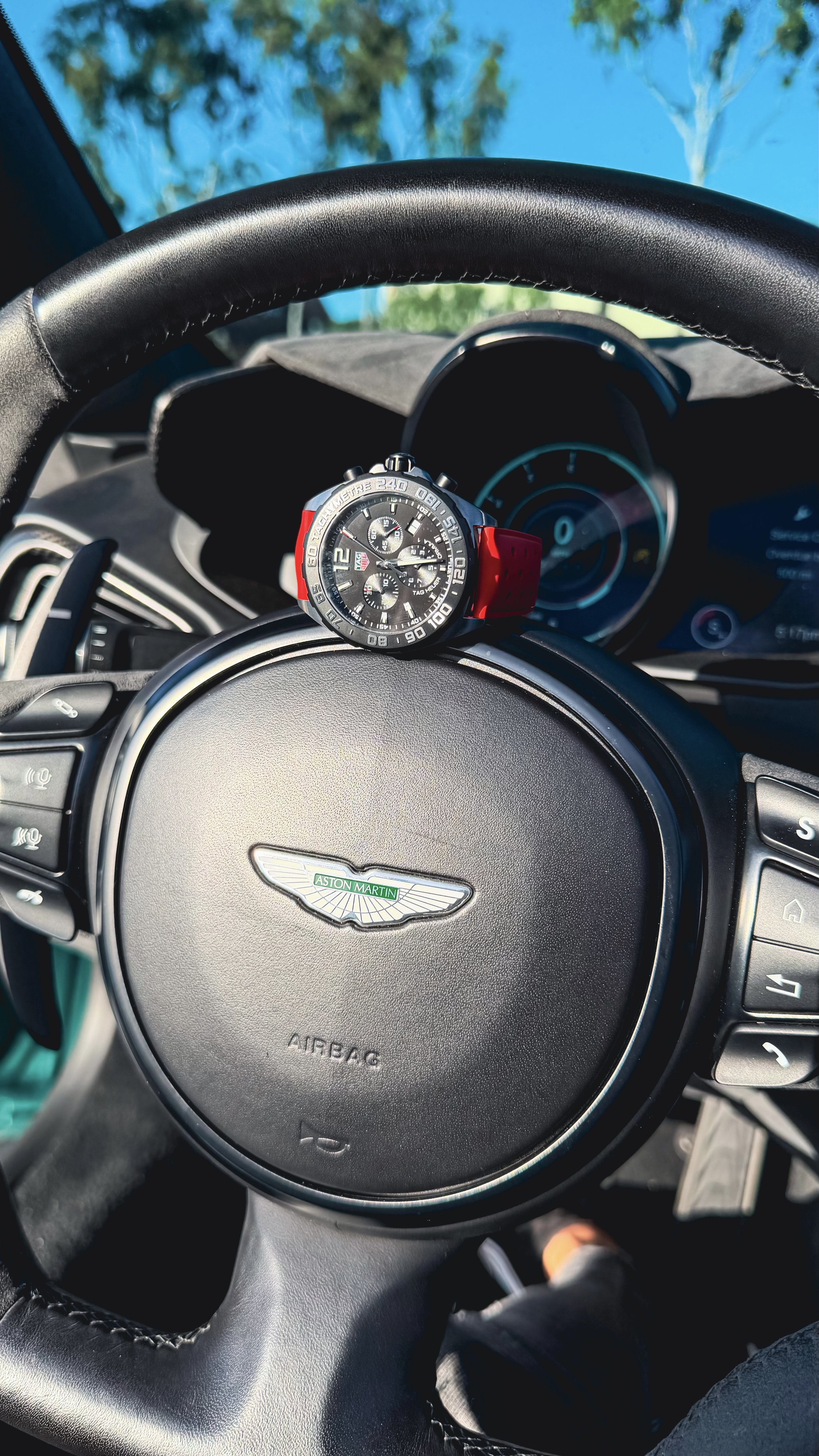
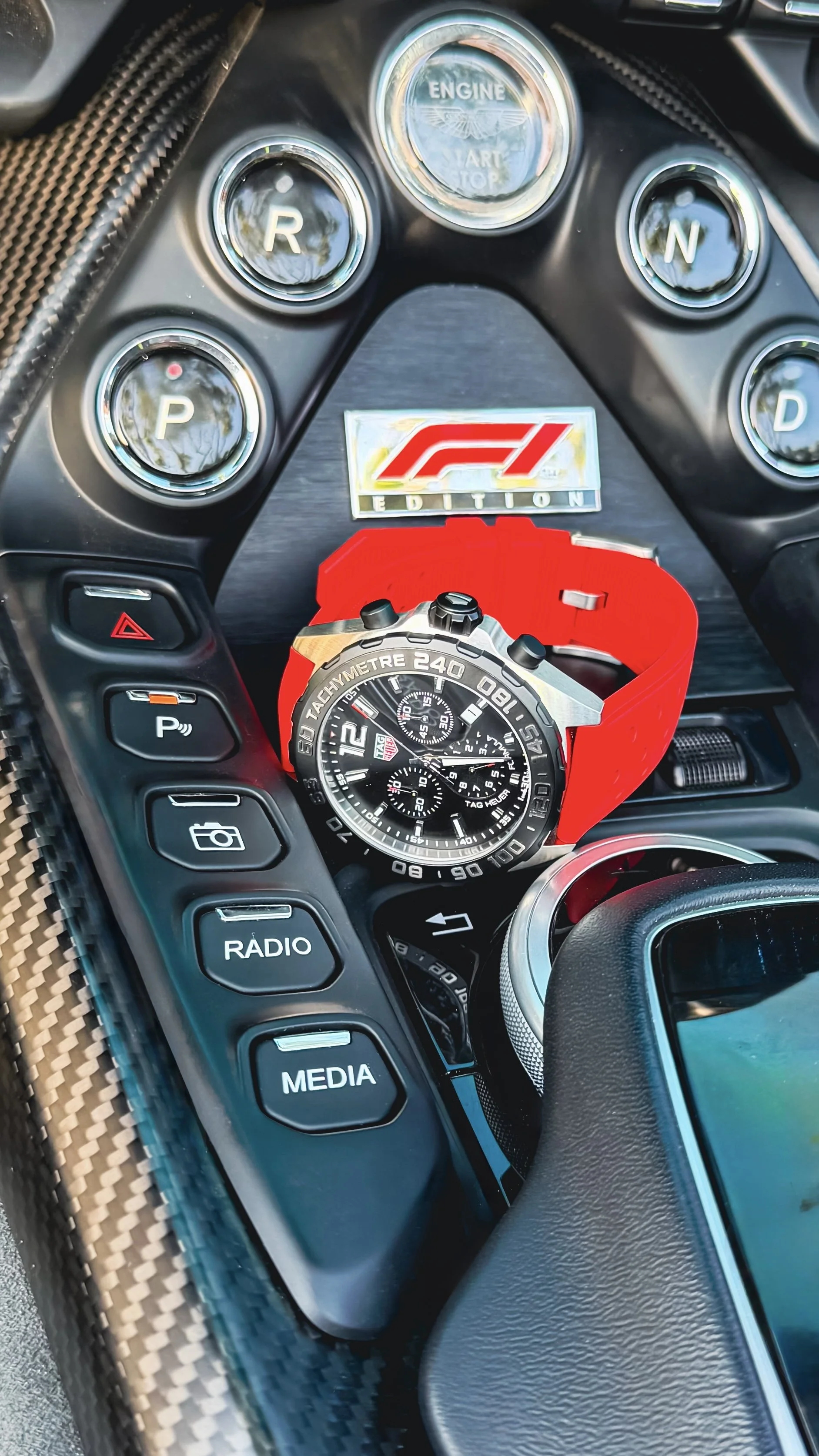
The photographs changed with it.
Some associations need very little help.
There is something else that happens when an object stops being precious enough to protect from ordinary life.
It begins collecting evidence.
A scratch has no particular romance when it happens.
It is simply a scratch.
Years later, the same imperfection may become something else entirely.
A trip. A race. A dinner. A place. A person.
Or nothing at all.
Memory is unreliable that way.
Perhaps objects are useful because they don't have to remember what happened to them. They simply carry the evidence forward.
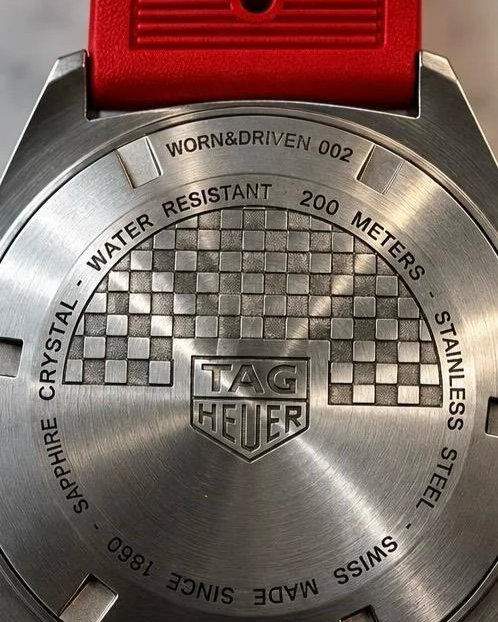
On the back of this one is a number. 002.
Most of the time, it cannot be seen. The caseback rests against the wrist, hiding the very detail that makes the watch individually identifiable.
I like that.
The most collectible thing about it disappears when it is being used for its intended purpose.
You have to remove the watch to find the number.
Wearing it conceals the proof that it is rare.
Automotive culture has a familiar expression for the car whose keys somehow keep ending up in your hand.
The daily driver.
It isn't necessarily the rarest car in the garage. It may not be the fastest, the most expensive or the one you would choose to explain your taste to someone else.
It is simply the one you keep choosing.
There may be a horological equivalent.
Not the watch waiting for the correct dinner or the appropriate occasion.
The one already on the wrist.
002 appears to be heading in that direction.
There is a certain irony in that.
Limited objects are often protected precisely because there will never be many of them. Twenty-five sounds like an argument for caution.
I'm beginning to think the opposite may be true.
There are twenty-five.
That tells you something about the watch.
002 tells you something about this one.
A serial number can establish provenance. It cannot create identity.
Life does that.
A box opening at Chrono Attack.
A Formula 1 simulator that proved considerably less forgiving than anticipated.
The first ordinary day afterward.
Black.
Then red.
Hours on the wrist that nobody photographed.
A steering wheel.
A table.
A conversation.
Eventually, perhaps, a mark in the steel whose origin I will swear I remember correctly.
Or won't.
Those things seem insignificant while they're happening.
Most beginnings do.
I keep returning to the photograph from Chrono Attack.
The box is open.
002 is inside.
Almost untouched.
At the time, the photograph documented the arrival of a watch.
It looks different now.
The object in that box has no history with me yet. Nothing has happened to it. No decisions have been made. It hasn't disappeared beneath a sleeve for an ordinary afternoon or become familiar enough to stop demanding attention.
Even the strap is still black.
There is an innocence to objects at the moment of acquisition. Everything that could happen to them remains ahead.
Preservation attempts to keep them there.
Ownership makes that impossible.
I don't think that's a loss.
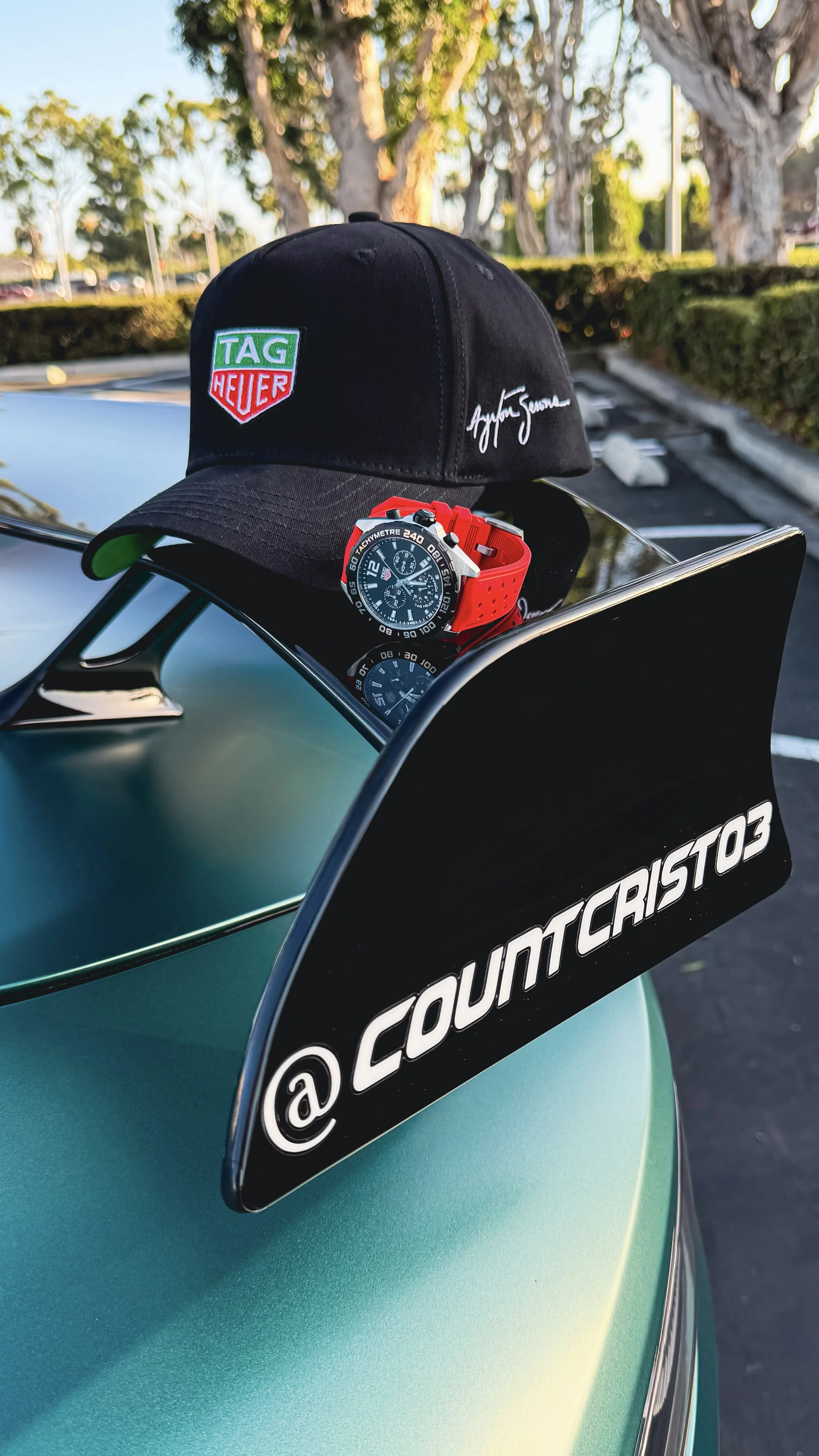
The watch on my wrist now is not the watch in that photograph, although every essential part of it remains the same.
One has condition.
The other is beginning to have a story.
There is a difference.
Maybe that is what I misunderstood about collectible things. Their value isn't necessarily diminished when the pristine moment ends. Something else simply begins accumulating alongside it.
Use. Preference. Association. Memory.
Time, essentially. Which is appropriate.
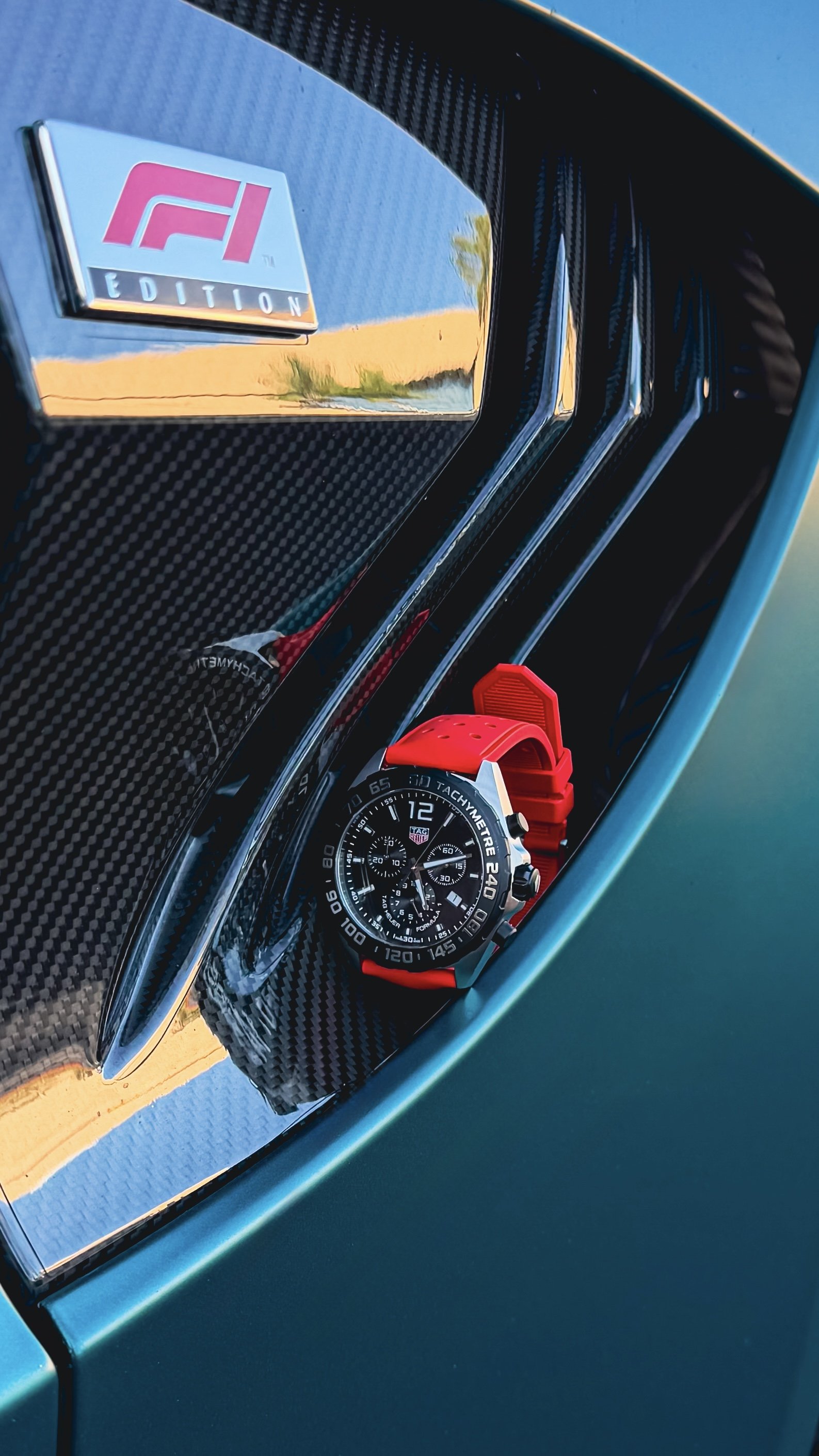
Forty years ago, Formula 1 marked a beginning for a newly named watch company. I didn't know that when the box opened at Chrono Attack.
I know it now.
Somewhere between those two moments, 002 stopped feeling like one of twenty-five watches.
It became my watch.
There will be other photographs.
Other roads.
Another mark in the steel. Perhaps another decision I haven't thought of yet.
Most of that remains unknowable, which is exactly where it should remain.
The story isn't finished.
It has barely begun.
No. 002 was made as one of twenty-five.
It was made to measure time.
It was made to carry a number.
But more than anything else, it was made to be worn.
And it is.